Genetic Clones: Hello! Dolly!
The Dolly Series takes as its motif 'Dolly', the first cloned sheep, and explores the contemporary issue of genetic replication through painting. Rather than treating replication as a matter of representation, the series examines how identical images can be transformed and expanded under varying conditions, shifting the question of replication from one of reproduction to one of structure and relation.
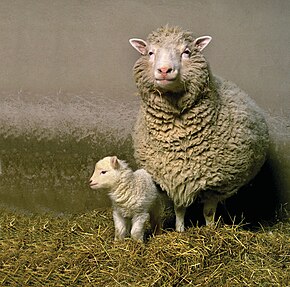
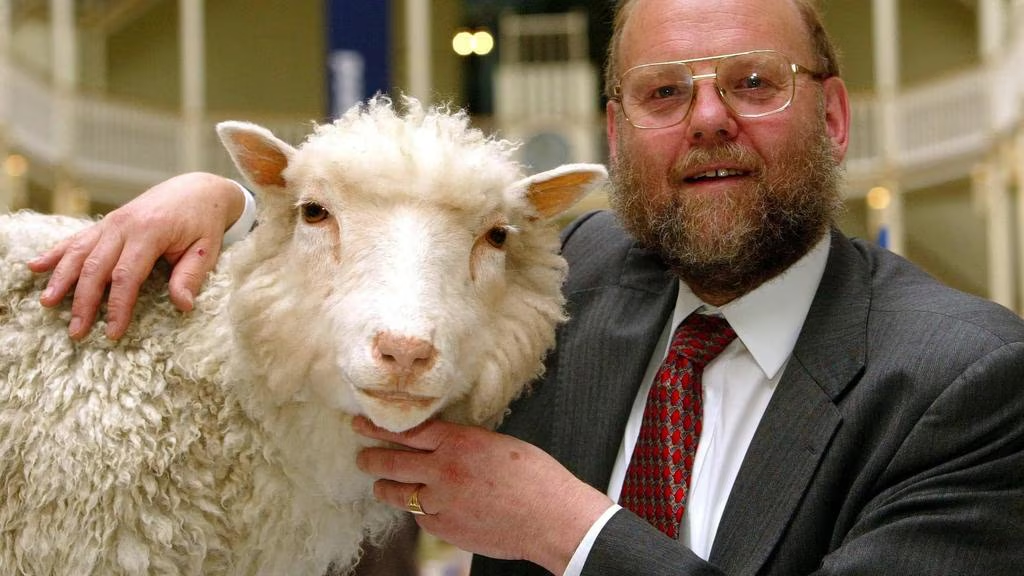
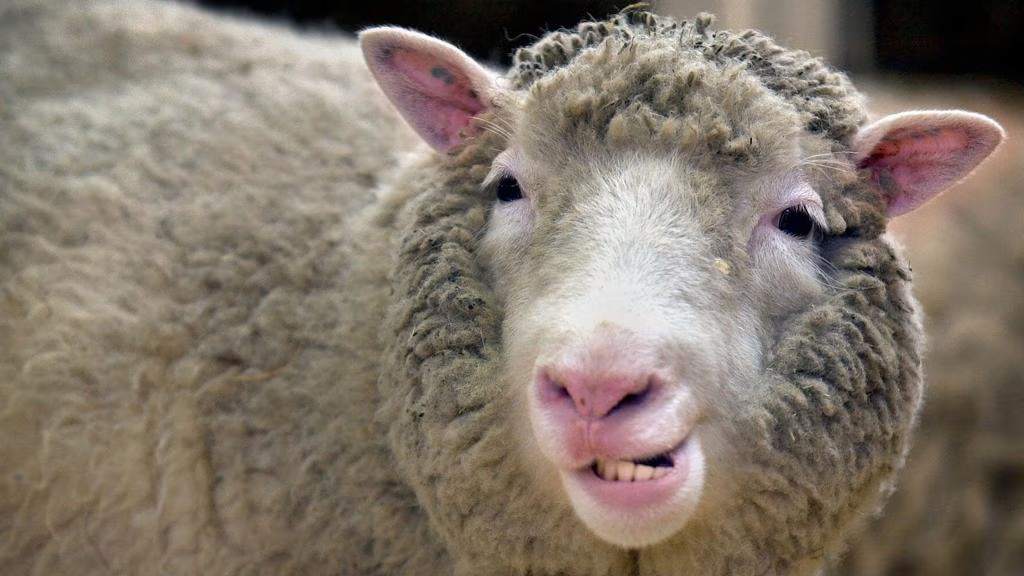
The sheep that appears in the paintings maintains a consistent formal structure, yet manifests in different states through variations in color, composition, and surface treatment. It is not treated as an object of realistic depiction, but reduced to a simplified formal unit. The body and face are constructed through relations of mass and planar form, while descriptive detail is deliberately restrained. This reduction does not aim to explain the subject, but to reveal how form is organized and transformed.
Structure of Repetition and Difference
In this series, repetition does not function as the reproduction of identical images, but as a structure that generates difference.
When a form with the same structural basis is presented as a single image versus when it is arranged in multiplicity, the rhythm of the pictorial field and the perception of space shift fundamentally. Variations in color, positional displacement, and differences in scale subtly differentiate each image, producing individuality within repetition.
Through this condition, the Dolly Series demonstrates how sameness and difference operate simultaneously, allowing a single structure to unfold into multiple outcomes. Replication is thus reinterpreted not as duplication, but as a structural process that transforms and expands according to its conditions.
Tension Between Surface and Structure
In certain works, the sheep appears wrapped or covered. While the external form is maintained, the interior is not directly revealed. This surface treatment generates a tension that simultaneously conceals the substance of the subject and emphasizes its outward form. As visible form and concealed structure are juxtaposed, the image is perceived not simply as representation, but as a condition defined by the relationship between surface and structure. In this sense, painting operates as a field that organizes the tension between the visible and the invisible, exterior and interior, surface and structure.
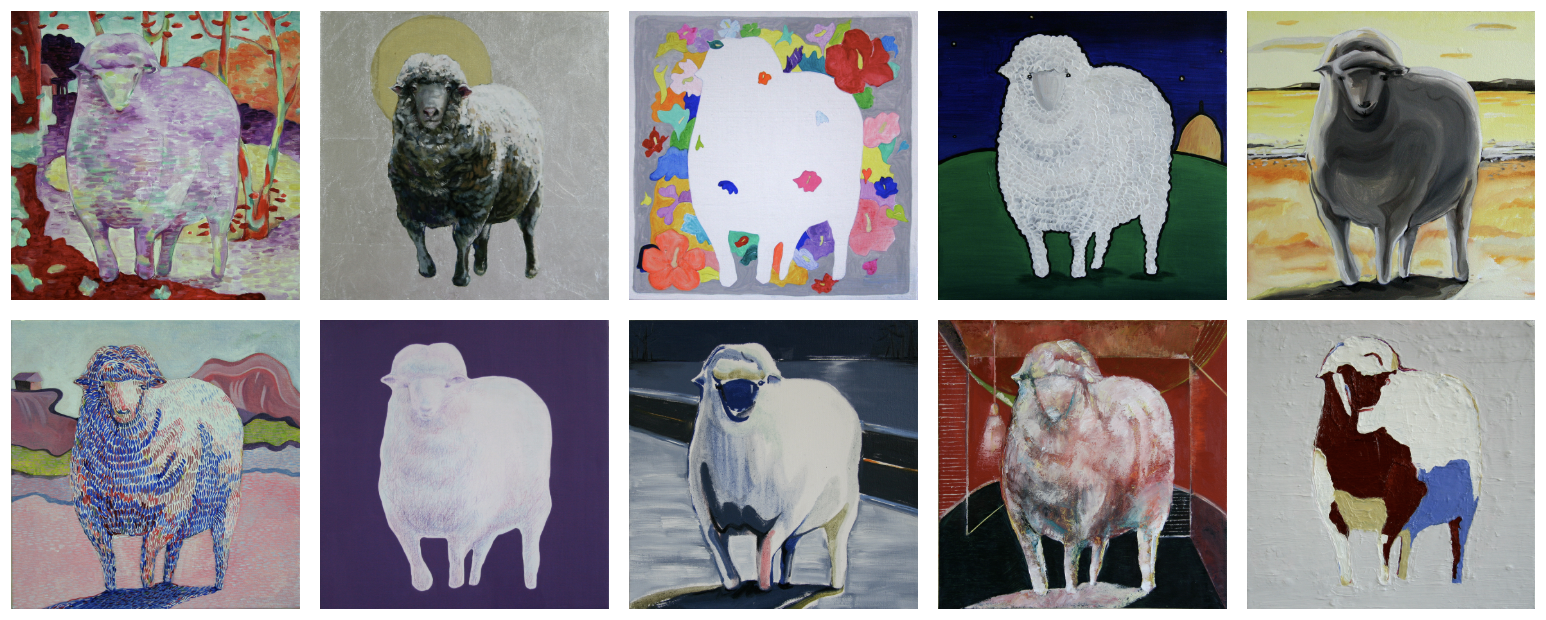 Genetic Clones: Hello! Dolly! Series, 2004-2011
Reconfiguration of Art Historical Methods
The Dolly Series does not approach replication merely as a thematic concern, but reconstructs it painterly through the integration of diverse formal languages developed within art history.
The reduction of form to its structural basis recalls the constructive approach of Paul Cézanne, while the serial repetition of identical imagery resonates with strategies associated with Andy Warhol. The act of wrapping the figure produces a visual effect comparable to the work of Christo and Jeanne-Claude, and the use of strong chromatic contrasts alongside simplified forms evokes the color sensibility of André Derain.
These elements are not cited individually, but are integrated within a single pictorial field, forming a system through which replicated images are painterly transformed and reconfigured.
A Painterly Reinterpretation of Replication
The repeated sheep in this series is not a simple depiction of an identical subject, but a device through which the concept of replication is visually transformed.
Position as an Early Body of Work
Although this series precedes the full conceptual articulation of the Schematic Medium, it already reveals the core principles of the artist’s practice.
. . .
Rather than repeating identical images, the series investigates how a single structure can be transformed and expanded under varying conditions. Through this process, the image is no longer presented as a fixed object, but as a structure that is continuously reconfigured through relations and conditions.
In this sense, the Dolly Series proposes that replication is not the reproduction of identical images, but a plastic system that reveals the process through which structure is transformed and extended.

Schematic Studies: Schematic Objects Study from Circle Geometry
Schematic Objects Study from Circle Geometry is a body of work that extends the circle-centered geometric structures and formal relationships explored in Circle Geometry into actual objects, examining how planar schemata may be transformed into spatial form.

Schematic Studies: Schematic Painting Study from Core Searching Drawings
Schematic Painting Study from Core Searching Drawings is a body of work that extends the semicircle-based formal structures explored in the earlier Core Searching Drawings into the field of painting. Reconstructing the basic forms developed through drawing within a painterly surface, this series combines color, light, and variable visual perception in order to generate a new sensory order. It is therefore not simply a translation of drawing into painting, but a pictorial

Schematic Platform no.1
Schematic Platform no.1 is an installation work that presents the overall concept of Schematic Medium by organizing drawings, paintings, objects, and structural elements into a single integrated spatial formation. Rather than displaying individual genres side by side as separate categories, this work brings together the different formal languages developed over time and activates them as one unified work.

Pattern Studies
Pattern Studies is a body of work centered on pattern as one of the formal elements of Schematic Medium, exploring how repetition, arrangement, color, and rhythm generate structure within the picture plane. In this series, pattern does not function as a merely decorative device or surface repetition, but as a key formal principle through which visual order and sensory rhythm are constructed.
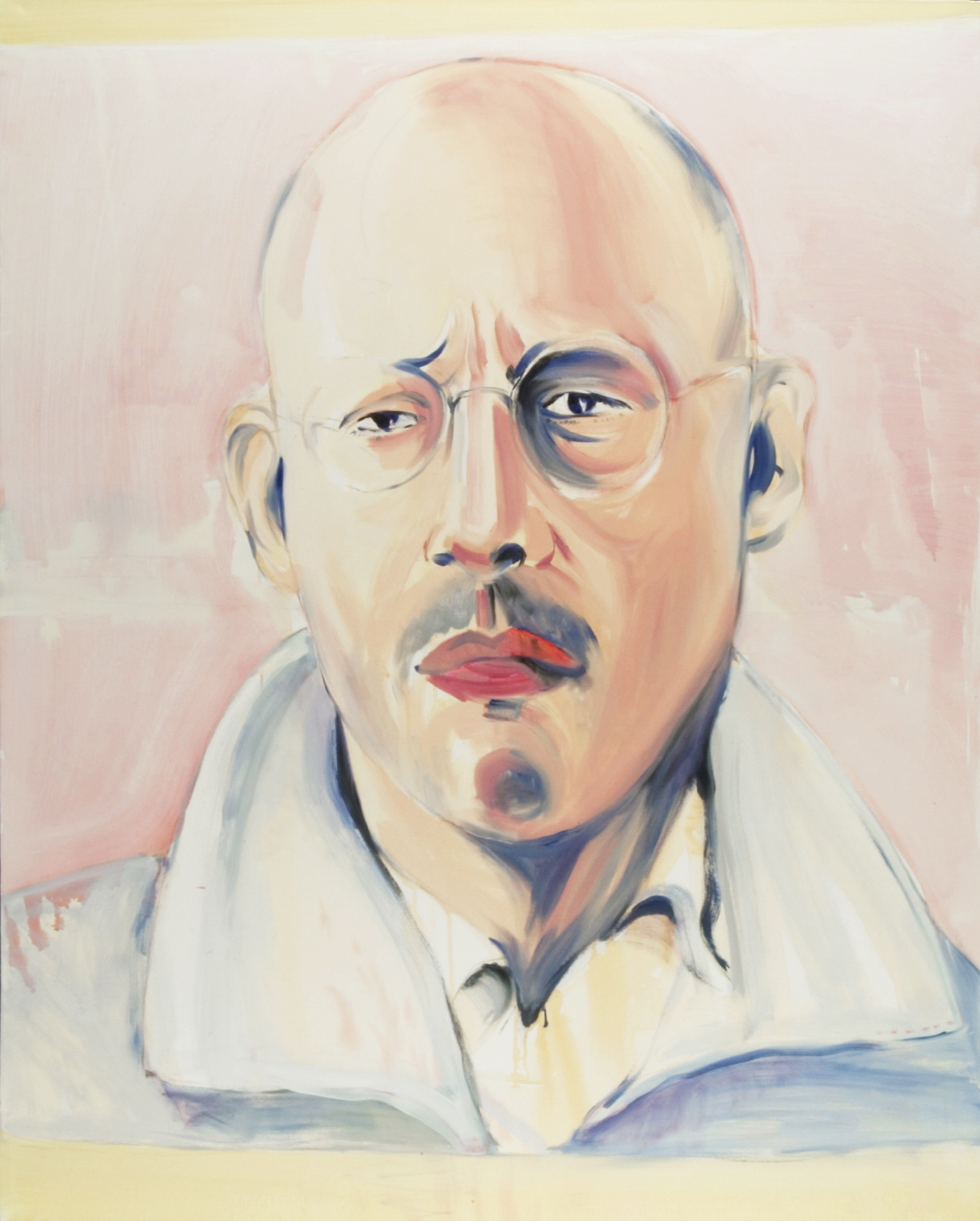
Face Series
The Face series is a body of paintings centered on the human face. Moving beyond conventional portraiture, the works explore emotional and psychological traces of human presence through color, brushstroke, composition, and expression. Each painting articulates the individuality and atmosphere of its subject through painterly means.
Genetic Clones: Hello! Dolly!
The sheep that appear on the surface maintain a consistent formal structure, yet emerge in different states through variations in color, composition, and surface treatment. Here, the figure of the sheep is treated not as an object of realistic representation, but as something reduced to a simplified unit of form. The body and face are constructed through the relationship between concise masses and planes, while descriptive detail is deliberately restrained. This reduction does not aim to explain the subject concretely, but to reveal how form itself is organized and transformed.