Face Series
Portraiture as a Structural Inquiry into the Human Mind
The Face Series reconsiders the conventional category of portraiture by transforming the face from an object of representation into a structural field in which the operations of the human mind become visible.
This series does not aim to record the external features of individuals or to describe their psychological states. Instead, it constructs a system that isolates and organizes the fundamental mental processes that constitute human existence—intuition, emotion, and cognition—analyzing their modes of operation through painting.
Historically, portraiture emerged as a genre that articulated social status and identity, and later expanded to explore psychological interiority. In the image-saturated conditions of the 21st century, however, the face no longer guarantees singular identity; it functions instead as visual information that is continuously reproduced and circulated. Under these conditions, painterly portraiture shifts away from repeating the function of representation, and toward reconfiguring the very way in which the human subject is perceived.
At this point of transition, the Face Series redefines the face not as a fixed appearance, but as an interface in which perception, emotion, and thought intersect. Portraiture thus becomes no longer a question of “who is depicted,” but a structural inquiry into “how the human mind operates.”
The Aesthetic Structure of the Face Series
The Face Series is organized along three axes—Intuition, Emotion, and Cognition—each of which is developed as an independent painterly system.
These are not separate themes, but fundamental operations that constitute human existence. Rather than presenting them in parallel, the series develops each through distinct painterly methods, constructing a systematic approach to analyzing the structure of inner processes.
Intuition Series (One Hour Series)
The Painterly Structure of Immediate Perception
The Intuition Series, developed primarily through the One Hour Series, serves as the point of departure for the Face Series. This body of work investigates the structure of intuitive judgment and immediate comprehension that occurs in the act of perception. The one-hour time constraint operates not merely as a practical condition, but as a formal device that excludes detailed representation and compels the selection and organization of essential features. As a result, the painting is constructed not through accumulation, but through selection and omission, emphasizing structural essentials rather than descriptive completeness.
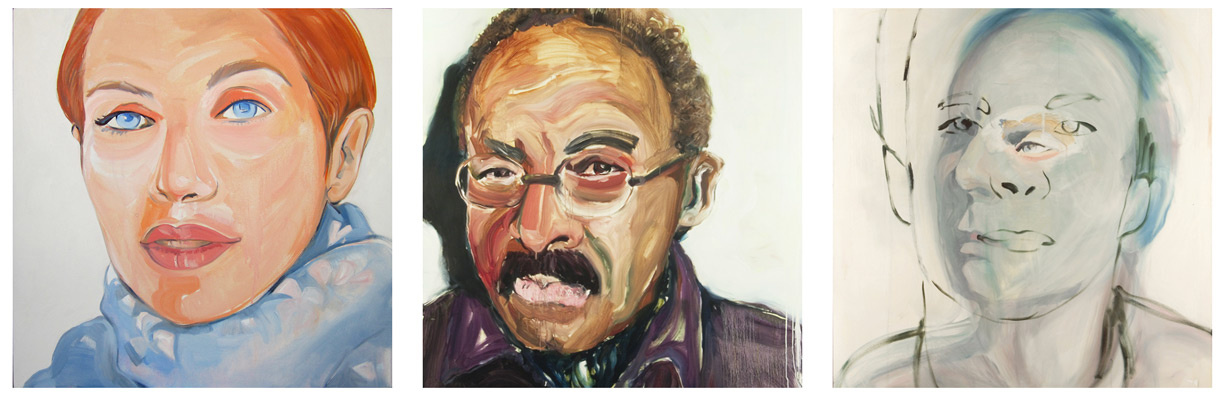
In this series, the face is not given as a fixed form, but emerges as the outcome of a moment of perception. Rapid brushwork, fragmented forms, and selectively emphasized structures function as traces of intuitive judgment, allowing painting to operate as a medium that directly reveals the process of perception.
In this sense, the Intuition Series departs from representational portraiture and instead visualizes the structure of perceptual emergence. Portraiture is thus transformed from an image-based outcome into a form that articulates the process of cognition itself.
Emotion Series
The Painterly Structure of Affective Transformation
The Emotion Series explores the way in which emotion operates upon the face—how affect transforms form and color within the pictorial field. Here, emotion is not treated as a subject to be expressed, but as a structural force that determines the configuration of the painting. It does not preserve the face as a stable form; instead, it emphasizes or distorts specific areas, disrupts chromatic balance, and alters the density of the pictorial field. These transformations vary according to the intensity and duration of emotion, gradually shifting the face away from a fixed image toward a fluid structure.
Brushwork and materiality play a central role in this process. Repetitive gestures and layered accumulations of paint register the persistence and temporal buildup of emotion, while color articulates its intensity and direction. The face thus functions not as a surface for expression, but as a material field in which emotion operates and accumulates.
While the Emotion Series engages with the legacy of expressive painting, it departs from it by treating emotion not as subjective expression, but as a structural force that reorganizes form. Portraiture is thereby extended from a narrative of feeling into a system that analyzes the operation of affect.
Cognition Series
The Painterly Structure of Thought and Concept
The Cognition Series investigates the structures of thought and conceptual understanding, focusing not on the depiction of specific individuals, but on the modeling of systems of thinking. In this series, figures function not as portraits of individuals, but as embodiments of distinct modes of perceiving and structuring the world. Figures such as Camus, Duchamp, and Andy Warhol are approached not as biographical subjects, but as conceptual systems, and painting becomes a means of organizing these systems visually.
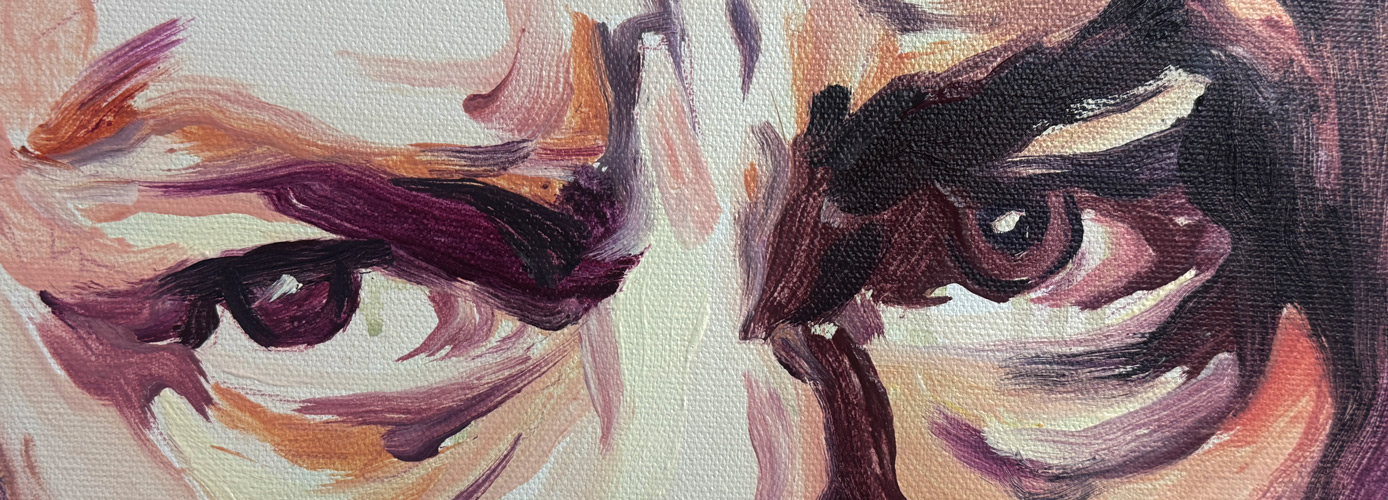
Painterly methods are not employed as stylistic references, but are reconfigured in response to conceptual conditions. Strategies such as fragmentation, repetition, flatness, and reduction correspond to different modes of thought, demonstrating how painting can operate as a medium for constructing structures of cognition.
In this sense, the Cognition Series may be understood as a response to the question of how painting can re-engage with the domain of thought after conceptual art. It transforms portraiture from the representation of individuals into a field for visualizing the structure of thinking itself.
. . .
The Face Series transforms portraiture from a genre of representation into a genre of cognition. Rather than depicting individuals, it constructs a painterly system that analyzes and visualizes how humans perceive, feel, and think. Within this framework, the face is no longer an object to be represented, but a structural device through which the operations of the human mind become manifest.
The Face Series may therefore be defined as follows:
Portraiture is not an image that represents the face, but a painterly form that structures the operations of the human mind.
What is 'Schematic Medium'?
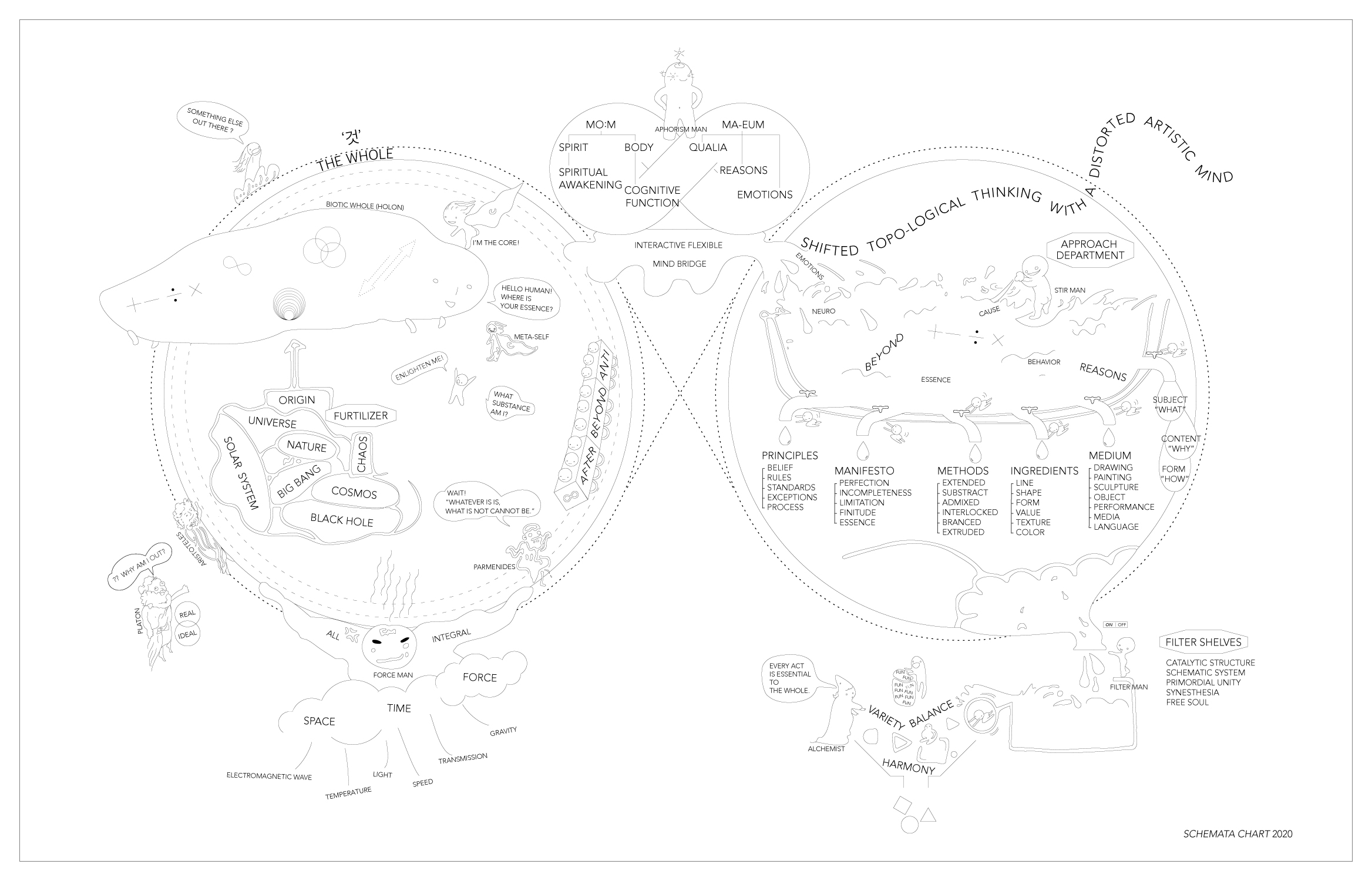
‘Schematic Medium’ is the core methodology penetrating my artistic world. It is a structure of thinking that does not seek to reproduce the essence of the world, but rather to model how the world operates. This term is defined on two levels
Schematic Chart
The left sector of the chart contains a deep exploration into how I dissect and perceive the source of life and existence. Core concepts like 'Origin', 'Universe', 'Nature', and 'Chaos' are interwoven with the physical dimensions of 'Time' and 'Space.' This reveals that I perceive the world not as a mere phenomenon, but by deconstructing it into fundamental forces and orders. Crucially, the Holon philosophy offers an integrated perspective, showing that every entity is both 'the whole and the part', forming the core pillar of my ontological thought. This sector is the solid foundation of my artistic contemplation and the very manner in which I perceive the cosmos and the self.

Featured Characters
In the Schematic Chart, my emanated self, RD (Revolutionary Debris), appears alongside other characters. These characters show how my mind and artistic world are structured, and guide viewers to explore my world with enjoyment. Each character goes beyond being a simple symbol and carries the operating principles of the Schematic Medium and hints about forthcoming works. Through this, viewers do not merely appreciate my work but pre-experience another narrative and the possibility of expansion. In the end, this chart is a map that reflects a dimension we do not see in everyday life. Through it I clarify the way I understand and express the world and offer viewers a new visual and philosophical experience. I wish to share not only simple artistic expression but deep thinking and an original perspective.

BYR 99 Prime Elements
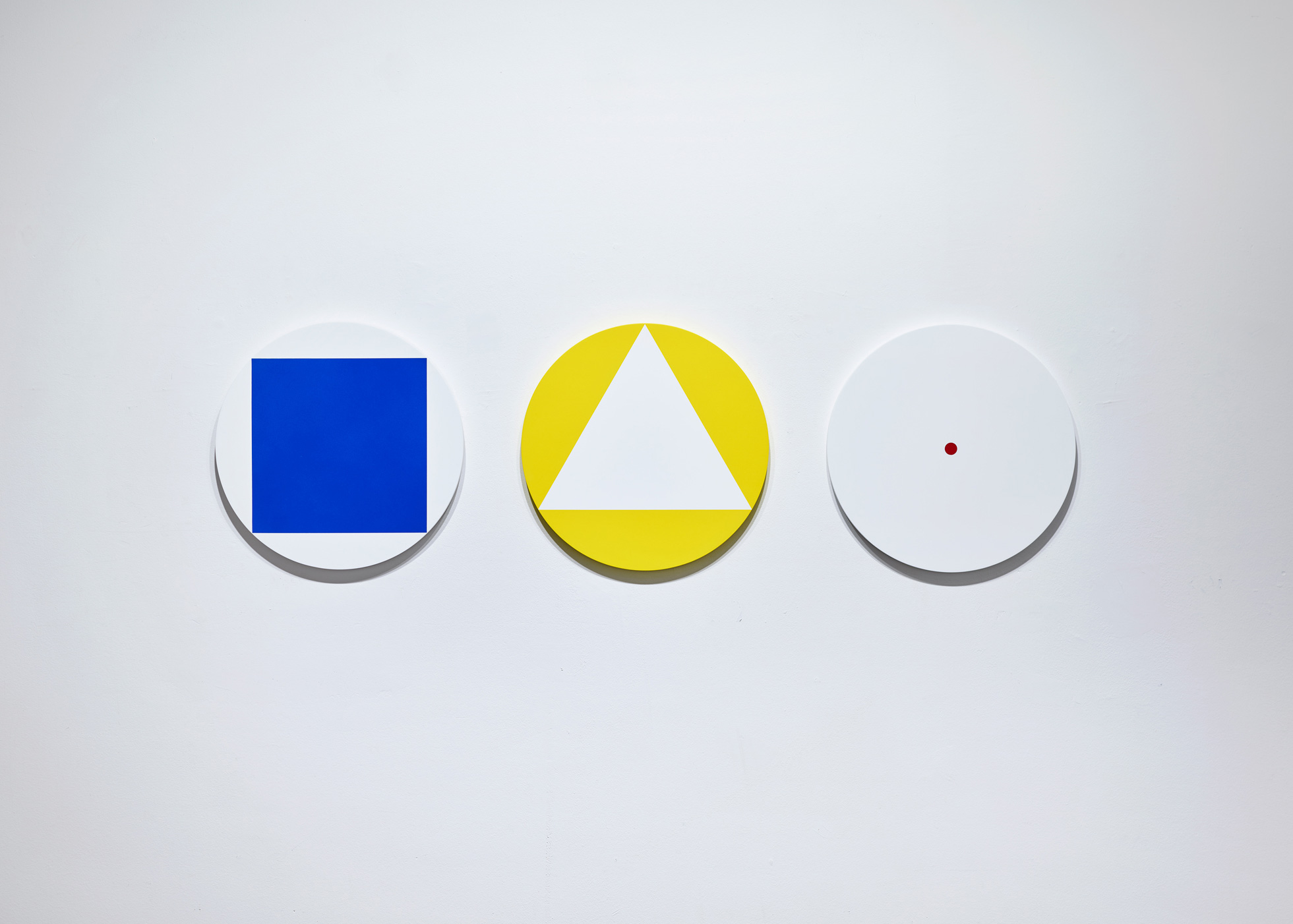
BYR 99 Prime Elements constitutes the most fundamental structural framework of Kim Heejo’s visual language. The series establishes the minimal unit of form through ninety‑nine elements—thirty‑three each of Blue, Yellow, and Red. Each element carries a specific formal code: Blue (square / human), Yellow (triangle / nature), and Red (circle / cosmos), and the relationships among these three elements generate the artist’s visual system.
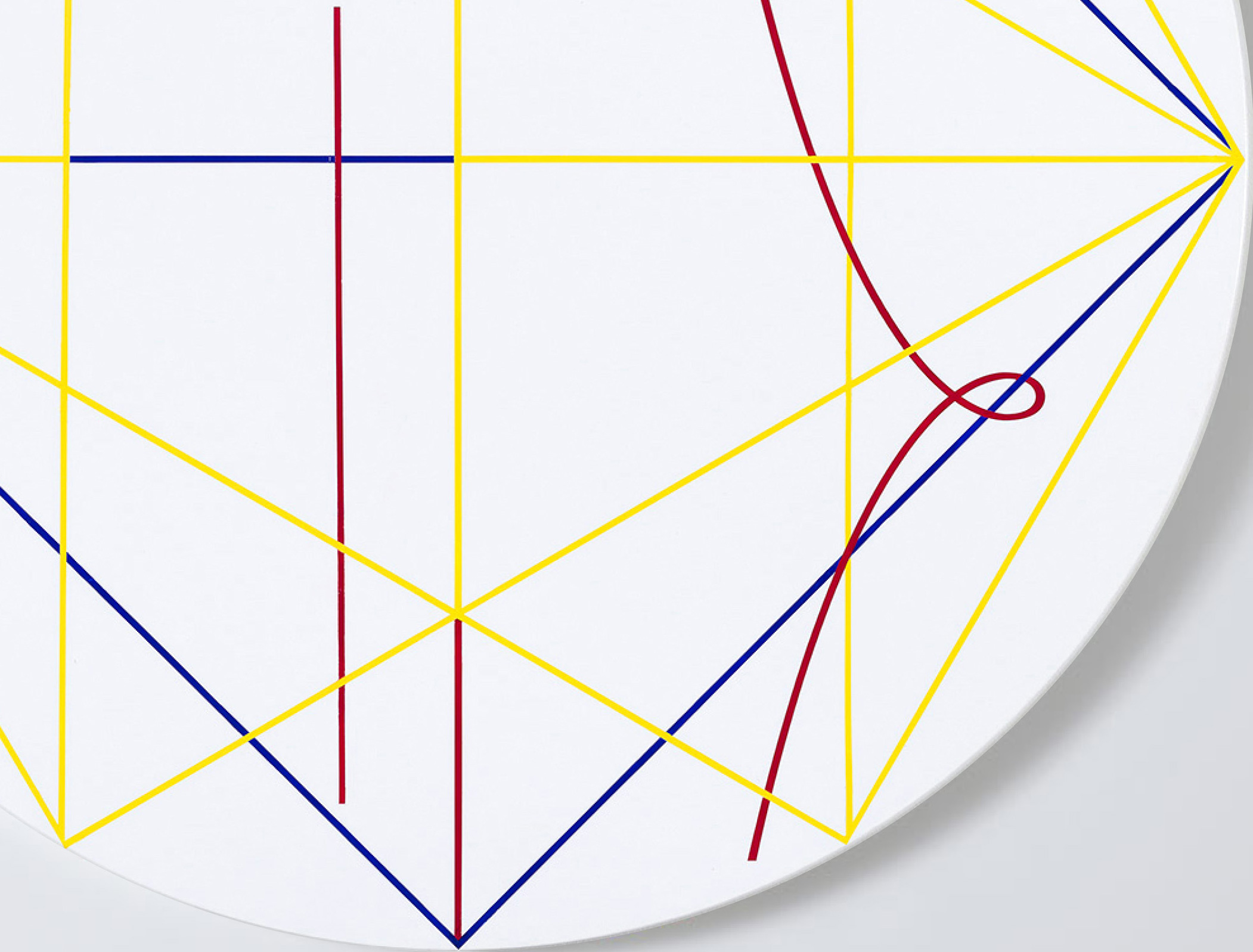
BYR Organic Schemata
BYR Organic Schemata develops from the structure of BYR Prime Elements and demonstrates the organic expansion of the formal system. Through the combination and variation of the basic elements, new configurations of form and structure emerge. The series moves beyond simple geometric units to explore a more fluid and organic visual order.
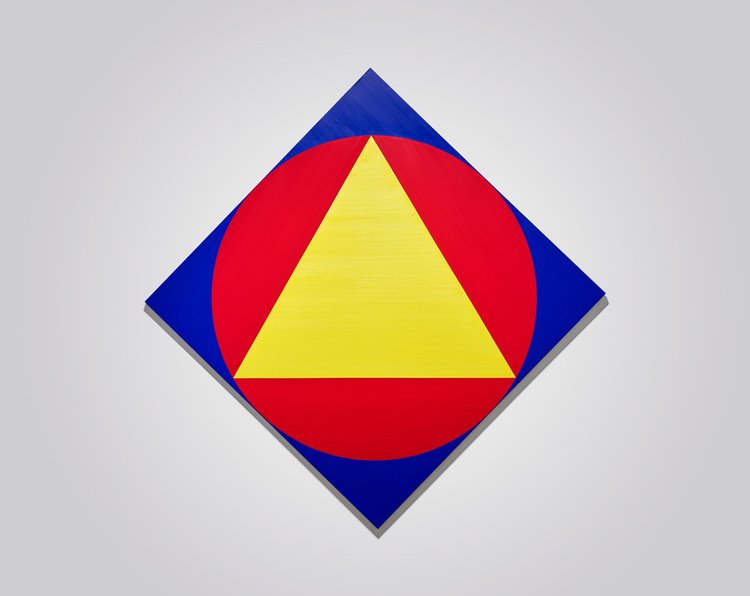
BYR Quad Origin
BYR Quad Origin investigates the generative principles of form by reducing the fundamental elements of the BYR system into a geometric structure. Within the relationships between basic forms and colors, the works examine structure, balance, and tension. Through minimal compositions, the series reveals the structural foundation of the BYR visual language while allowing diverse formal variations.
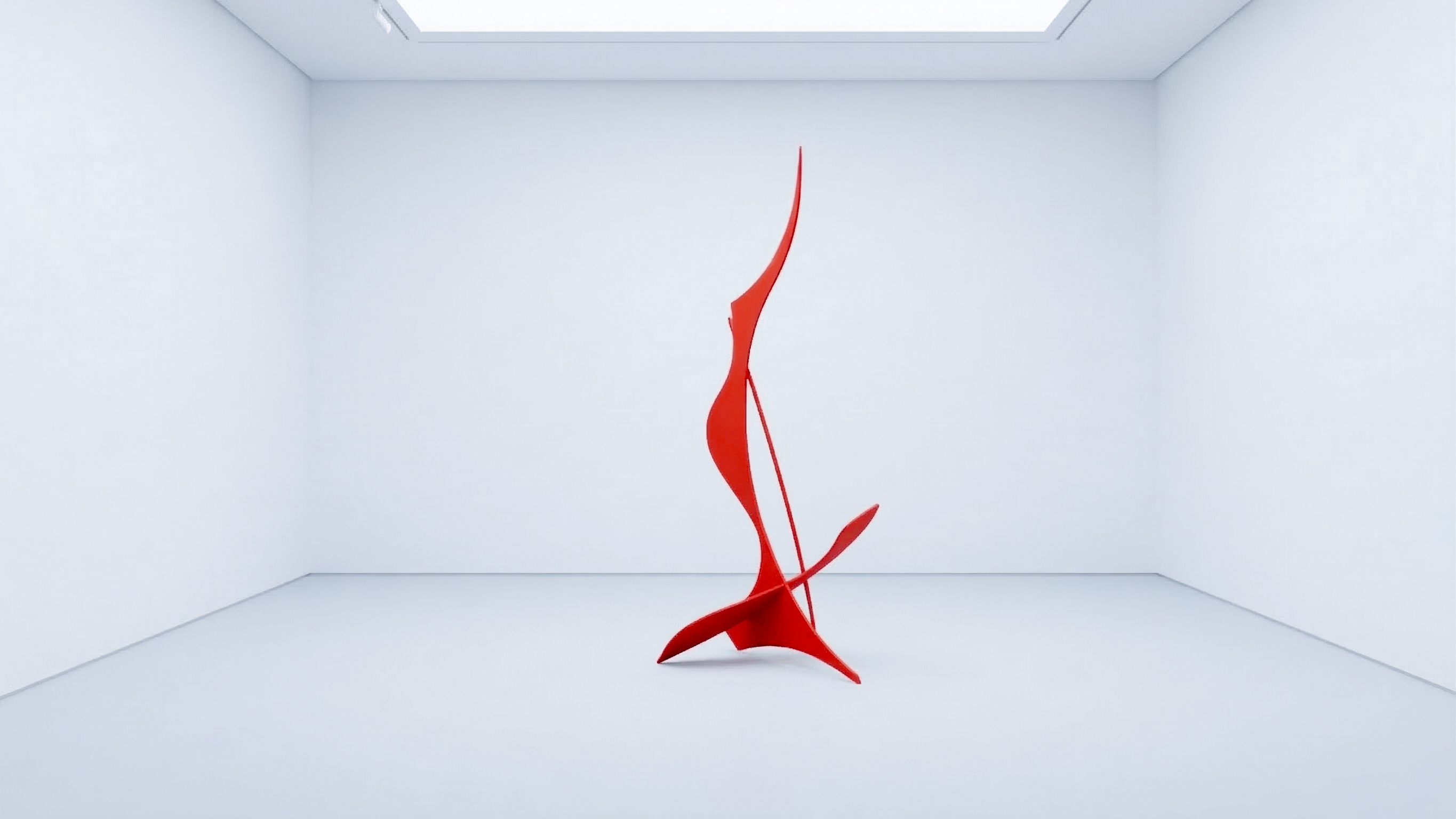
Tri Form Series
The Tri Form Series rearticulates the conceptual structure of BYR Prime Elements as a unified system. Whereas Blue (Gyeok), Yellow (Hyeong), and Red (Gong) were previously presented as independent formative principles, here they are reconfigured to operate simultaneously within a single, integrated structure.
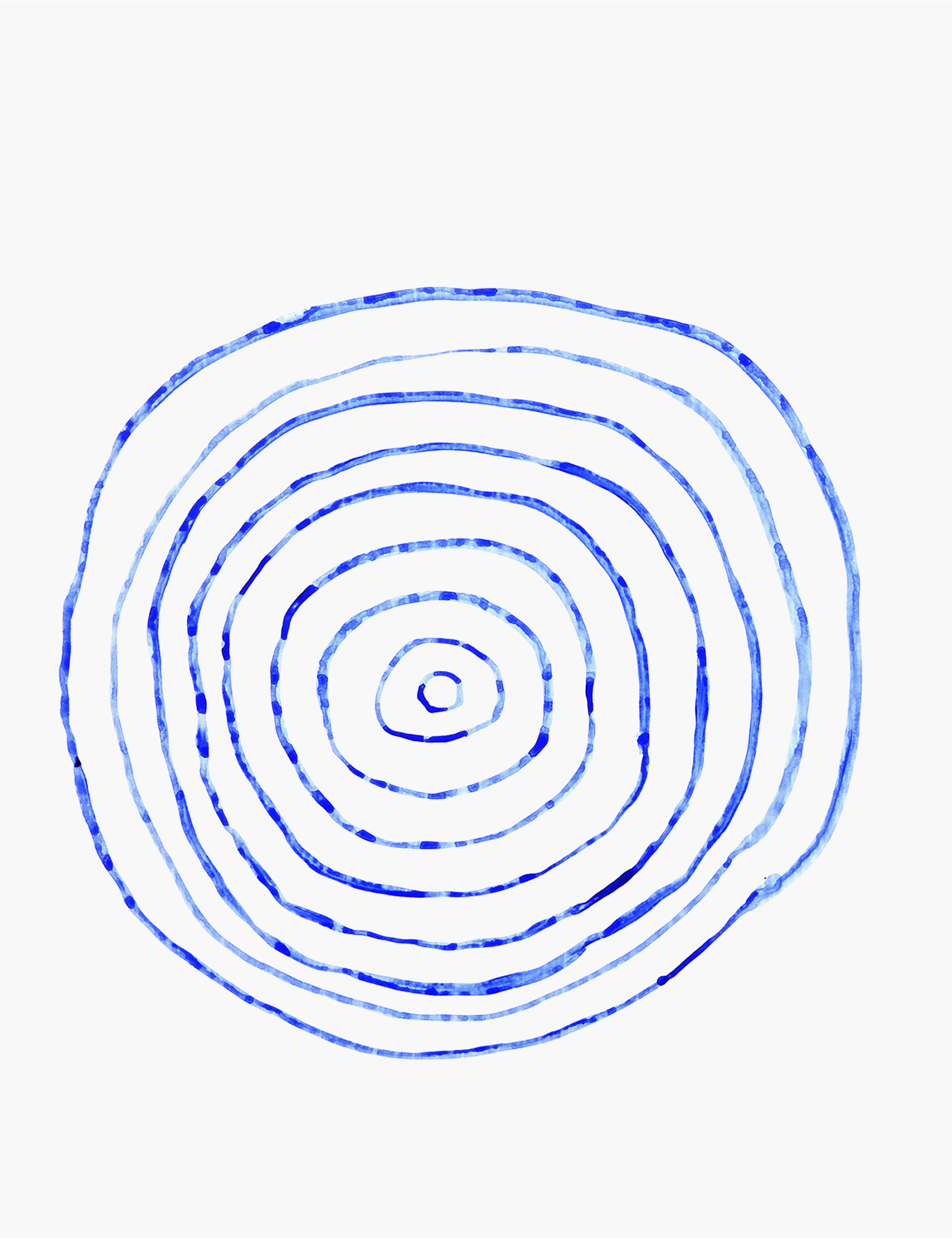
Core Searching series: ‘Semi-Circle & No.9’ Drawing Series
Core-Searching Drawings are early works that investigate the fundamental structure of the artist’s visual language. Through repeated variations of simple forms and signs, the drawings explore the process through which conceptual ideas transform into formal structures. These drawings mark the starting point of a visual system that later expands into painting and object-based works.
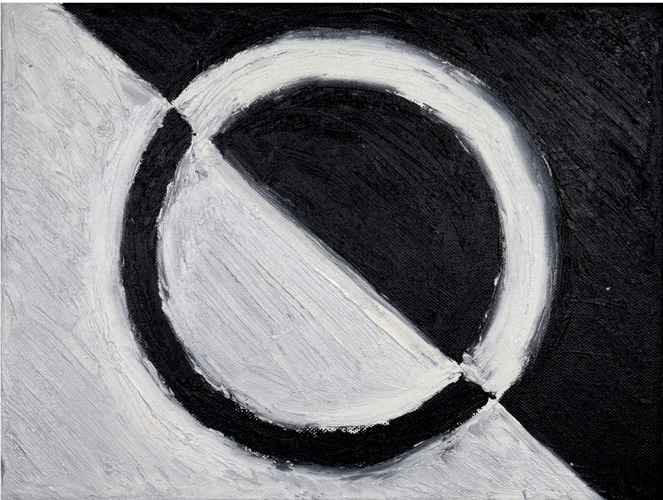
Core Searching series: Core Searching Paintings
Core Searching Paintings is a body of paintings that explores bodily movement and performative process through the fundamental formal language of BYR: the color system of Blue, Yellow, and Red, and the geometric structures of the square, triangle, and circle.
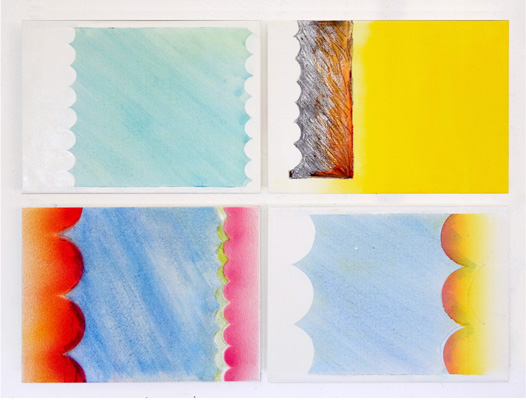
Core Searching series: Color Layered Line Drawing Series
“Color-Layered Line” Drawing Series is a body of work in which colored lines, generated through the movement of the artist’s hand across a measured distance, are layered and accumulated on the surface to form fundamental structures and formal relationships centered on the semicircle.