Core Searching series: Core Searching Paintings - kim heejo

Core Searching series: Core Searching Paintings


A Body of Work Exploring Bodily Movement and Performative Process through the Fundamental Colors and Geometric Forms of BYR


Core Searching Paintings is a body of paintings that explores bodily movement and performative process through the fundamental formal language of BYR: the color system of Blue, Yellow, and Red, and the geometric structures of the square, triangle, and circle. Using oil stick as a direct and material medium, this series examines how minimal colors and forms are generated, transformed, and brought into relation on the pictorial surface. Here, Blue, Yellow, and Red are not merely chromatic choices, but primary units that constitute the underlying order of the BYR structure, while the square, triangle, and circle function not simply as geometric figures, but as essential forms through which pictorial construction and expansion become possible.
 
At the center of this work is not the presentation of a completed image, but an effort to return to the very point of origin of painting through the most basic colors and forms. By repeatedly engaging the restricted palette of Blue, Yellow, and Red, together with the minimal formal elements of the square, triangle, and circle, the artist investigates how painting begins and how it forms structure. Core Searching Paintings, therefore, is less a body of work concerned with depicting objects or conveying narrative than a process through which the fundamental conditions of form are reexamined through bodily action.
 
In this series, color functions not as sensory decoration, but as a structural language. Blue, Yellow, and Red operate as independent colors while simultaneously forming a unified primary system that generates relations of tension and balance, separation and connection within the image. Rather than aiming toward an infinite world of chromatic variation through mixture and diffusion, these colors are used to reveal the most elementary differences and orders. This restriction does not signify reduction in the negative sense, but a means of clarifying structure and returning painting to a more essential formal condition.
 
Form operates in a similar way. The square, triangle, and circle do not appear here as fixed or completed images, but as structures provisionally formed and dissolved through line, plane, pressure, and movement. At times, only a fragment of a circle is revealed; at others, straight and curved lines intersect, presenting a state prior to the full emergence of geometric form. In some works, even a single band or line is enough to suggest triangular directionality, circular curvature, or the bounded order of the square. In this way, form is not treated as a stable result, but as a process of becoming, and that process itself is brought to the foreground as one of the essential conditions of painting.
 
The medium of oil stick plays a decisive role in shaping the character of this work. As a material that bypasses the indirect mediation of brush and liquid paint, oil stick transfers the pressure and movement of the hand directly onto the surface, making both the immediacy of action and the resistance of matter visible at once. Lines are not smoothly refined, but pushed, interrupted, layered, and at times dragged across the surface. The pictorial field thus becomes not a flat arrangement of colors, but a material arena in which bodily movement, pressure, speed, and rhythm accumulate. In particular, the traces of Blue, Yellow, and Red set against a dark ground do not simply assert their chromatic identity, but evoke a process in which structure is searched for and gradually brought into visibility out of darkness.
 
Within this work, the body is not merely the agent that manipulates a tool, but a direct formative principle that shapes the image. A single line changes in thickness, density, and intensity according to the speed and pressure of the hand, and even the curvature of a circle or the direction of a band is subtly altered by bodily movement. The traces left on the surface are therefore both the result of abstract form and the record of concrete physical action. In this sense, Core Searching Paintings is not a mode of painting grounded solely in mental conception, but a bodily painting through which the structure of form is discovered and tested through movement.
 
Performativity is one of the central conditions of the series. Here, performance does not simply refer to repeated movement, but to the ongoing process of accumulating subtle differences and transformations through the repeated engagement of the same limited elements. The recurrence of Blue, Yellow, and Red, the reappearance of circles and lines, and the contrast between dark ground and luminous trace all give the surface the character of a sustained and almost ritualized practice. Yet this repetition is not mechanical reproduction. It is a performative act in which slightly different structures emerge each time in response to changing bodily conditions and perceptual states. The work therefore does not present a finished geometry, but reveals the accumulation of time through which geometric order is physically searched for and continuously generated.
 
The simplicity of form and the expansion of structure are also defining features of this series. Although the work employs an extremely limited palette and only the most basic geometric forms, these minimal elements generate rich visual rhythms and spatial tensions through repetition, layering, division, and combination. A circle does not remain a closed shape, but produces relations between interior and exterior; a single line establishes direction and division; the juxtaposition of three colors organizes movement across the surface. In this way, simple elements enter into relation with one another to produce a complex formal order, and the work demonstrates an attempt to realize the greatest structural intensity through the most reduced visual language.
 
Above all, Core Searching Paintings reasserts the act of painting itself as a fundamental question of painting. Here, painting is not a means of representing the external world, but a structural event in which color and form, body and time, repetition and trace intersect within a single surface. The meaning of the work lies not only in what is depicted, but in the bodily practice and formal investigation through which the image comes into being. In this respect, the series may be understood as a form of painting that carries a performative dimension, in which the final image and the time of action that made it possible remain inseparable.
 
Ultimately, Core Searching Paintings can be understood as a body of work that reexamines the fundamental structure of painting through the bodily and performative dimensions of the basic BYR colors—Blue, Yellow, and Red—and the most elementary geometric forms of the square, triangle, and circle. The directness of oil stick as a medium makes this investigation materially immediate, while the traces of line and color left on the surface record the very process through which form comes into being. The series is therefore not simply a body of abstract paintings, but a structural inquiry into the point of origin and generative principles of painting through the use of basic color and basic form.


Schematic Studies: Schematic Objects Study from Circle Geometry


Schematic Objects Study from Circle Geometry is a body of work that extends the circle-centered geometric structures and formal relationships explored in Circle Geometry into actual objects, examining how planar schemata may be transformed into spatial form.

Schematic Studies: Schematic Painting Study from Core Searching Drawings


Schematic Painting Study from Core Searching Drawings is a body of work that extends the semicircle-based formal structures explored in the earlier Core Searching Drawings into the field of painting. Reconstructing the basic forms developed through drawing within a painterly surface, this series combines color, light, and variable visual perception in order to generate a new sensory order. It is therefore not simply a translation of drawing into painting, but a pictorial

Schematic Platform no.1


Schematic Platform no.1 is an installation work that presents the overall concept of Schematic Medium by organizing drawings, paintings, objects, and structural elements into a single integrated spatial formation. Rather than displaying individual genres side by side as separate categories, this work brings together the different formal languages developed over time and activates them as one unified work.

Pattern Studies


Pattern Studies is a body of work centered on pattern as one of the formal elements of Schematic Medium, exploring how repetition, arrangement, color, and rhythm generate structure within the picture plane. In this series, pattern does not function as a merely decorative device or surface repetition, but as a key formal principle through which visual order and sensory rhythm are constructed.
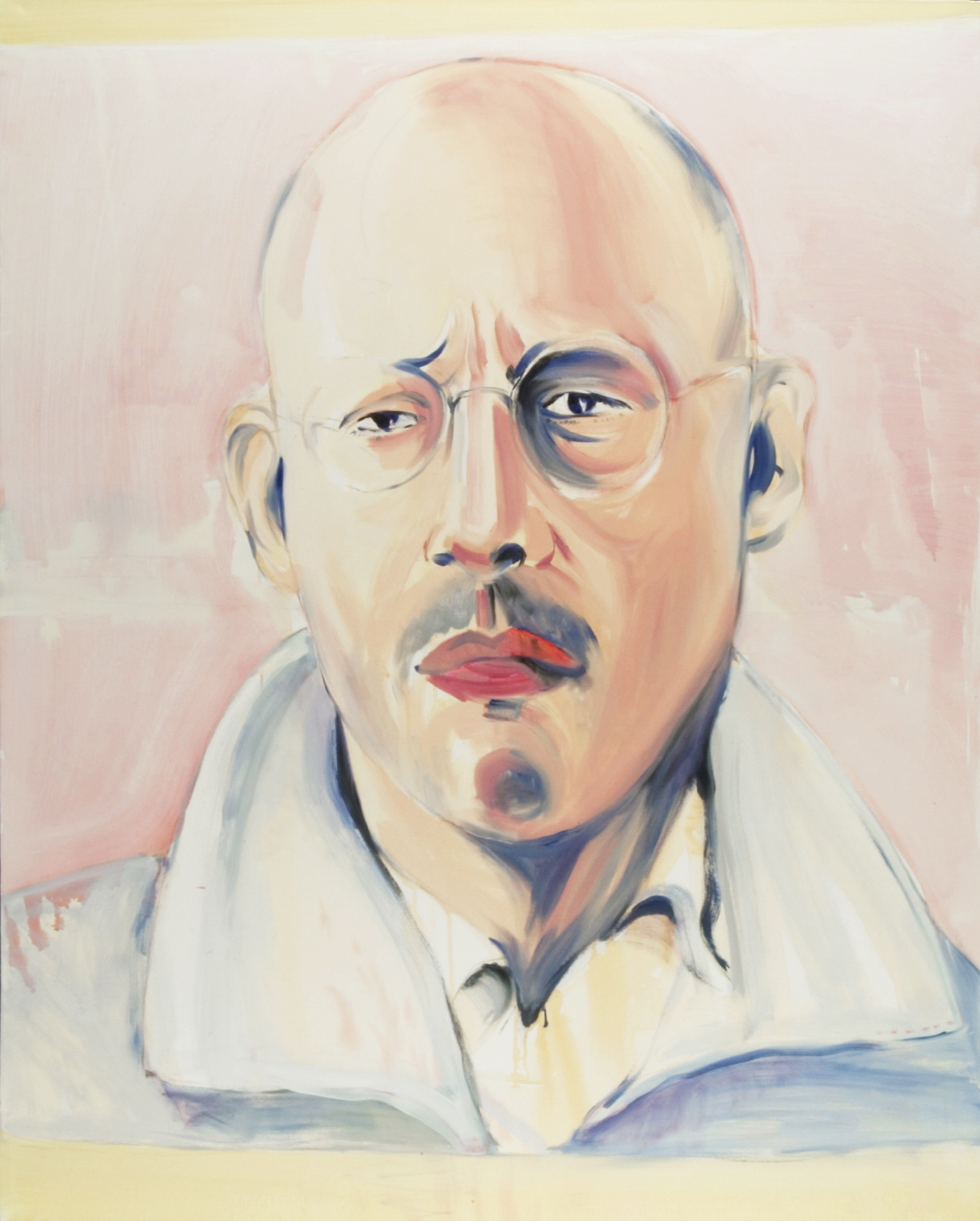
Face Series


The Face series is a body of paintings centered on the human face. Moving beyond conventional portraiture, the works explore emotional and psychological traces of human presence through color, brushstroke, composition, and expression. Each painting articulates the individuality and atmosphere of its subject through painterly means.
Genetic Clones: Hello! Dolly!


The sheep that appear on the surface maintain a consistent formal structure, yet emerge in different states through variations in color, composition, and surface treatment. Here, the figure of the sheep is treated not as an object of realistic representation, but as something reduced to a simplified unit of form. The body and face are constructed through the relationship between concise masses and planes, while descriptive detail is deliberately restrained. This reduction does not aim to explain the subject concretely, but to reveal how form itself is organized and transformed.