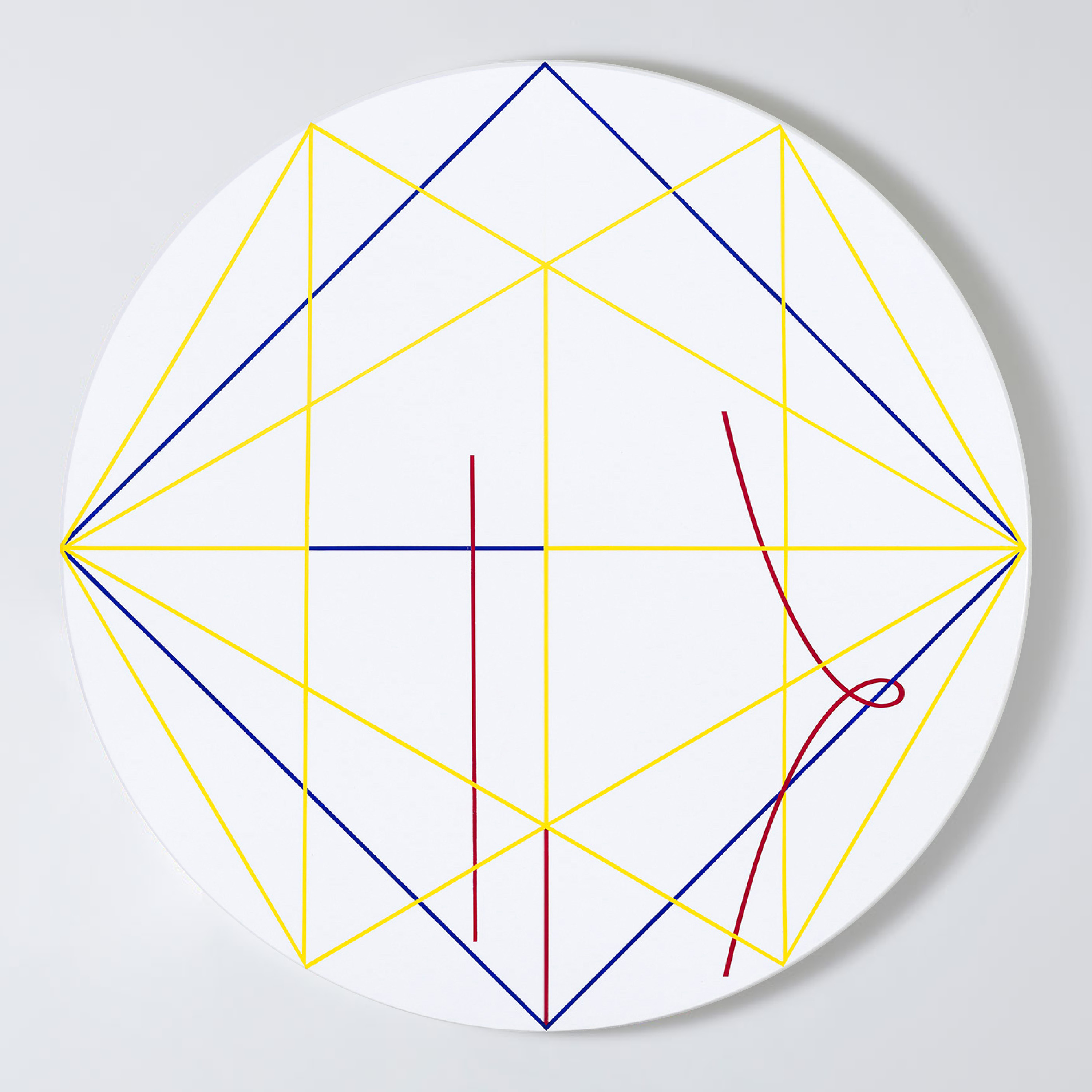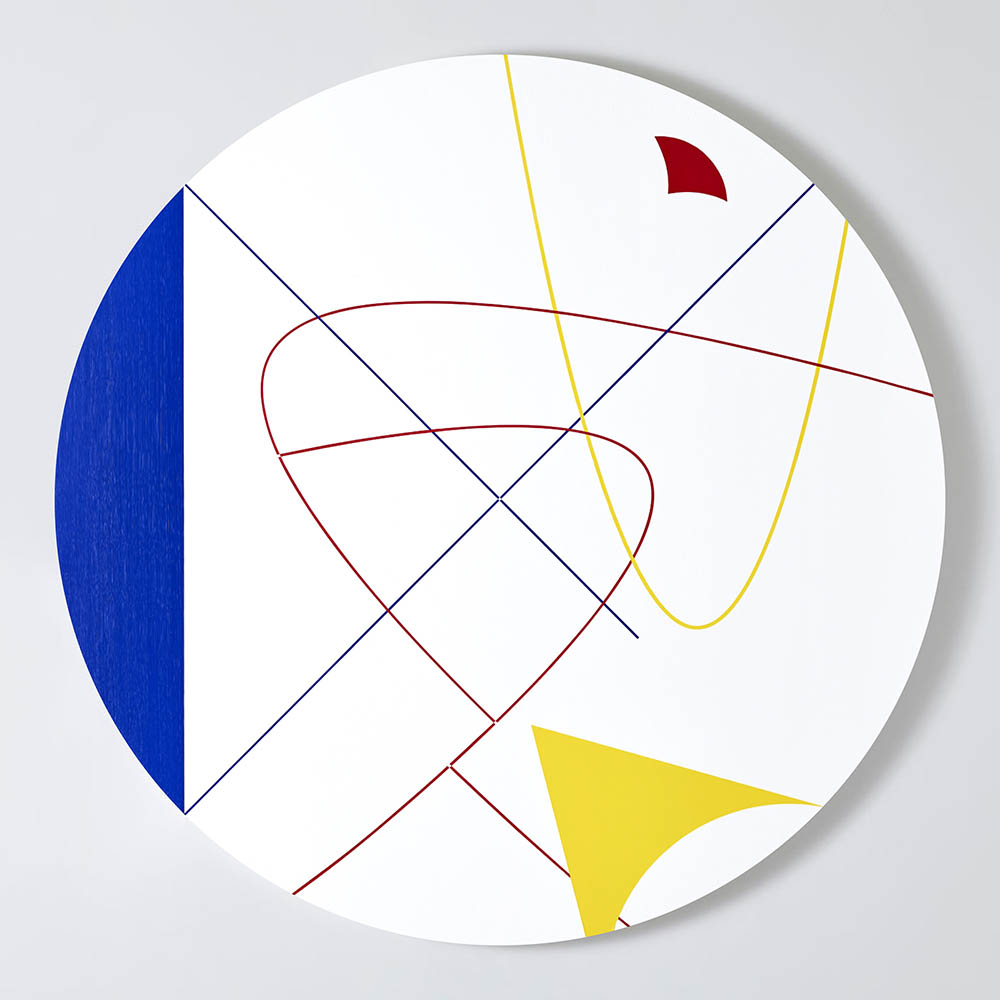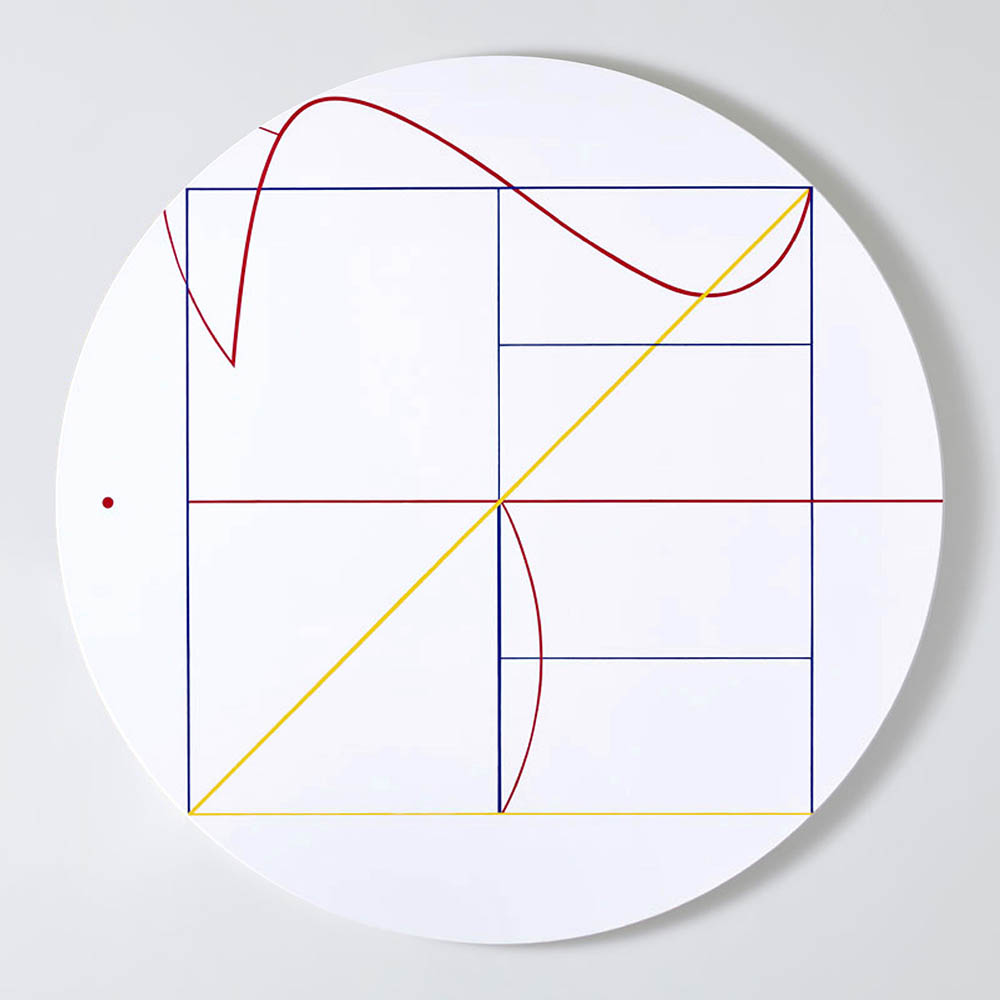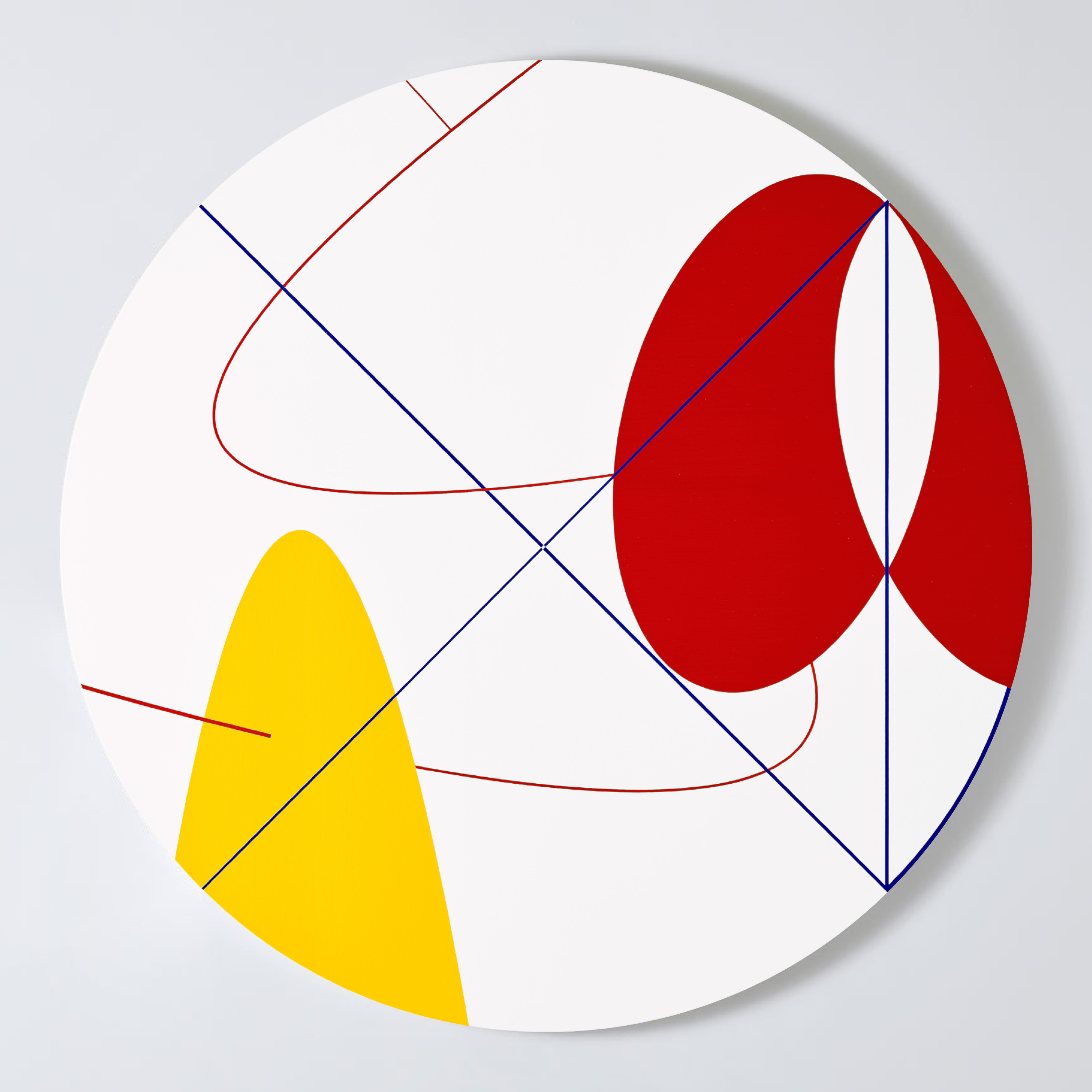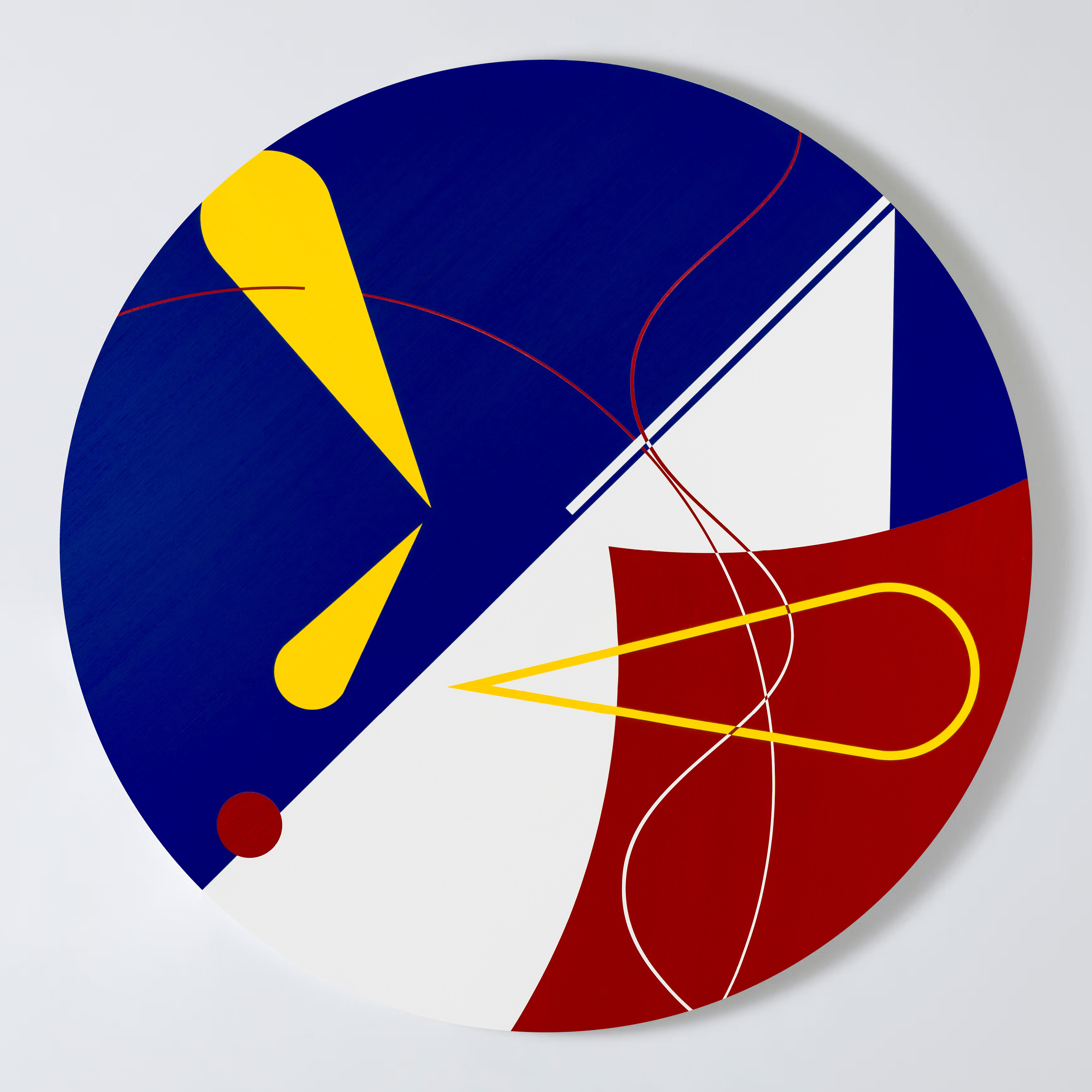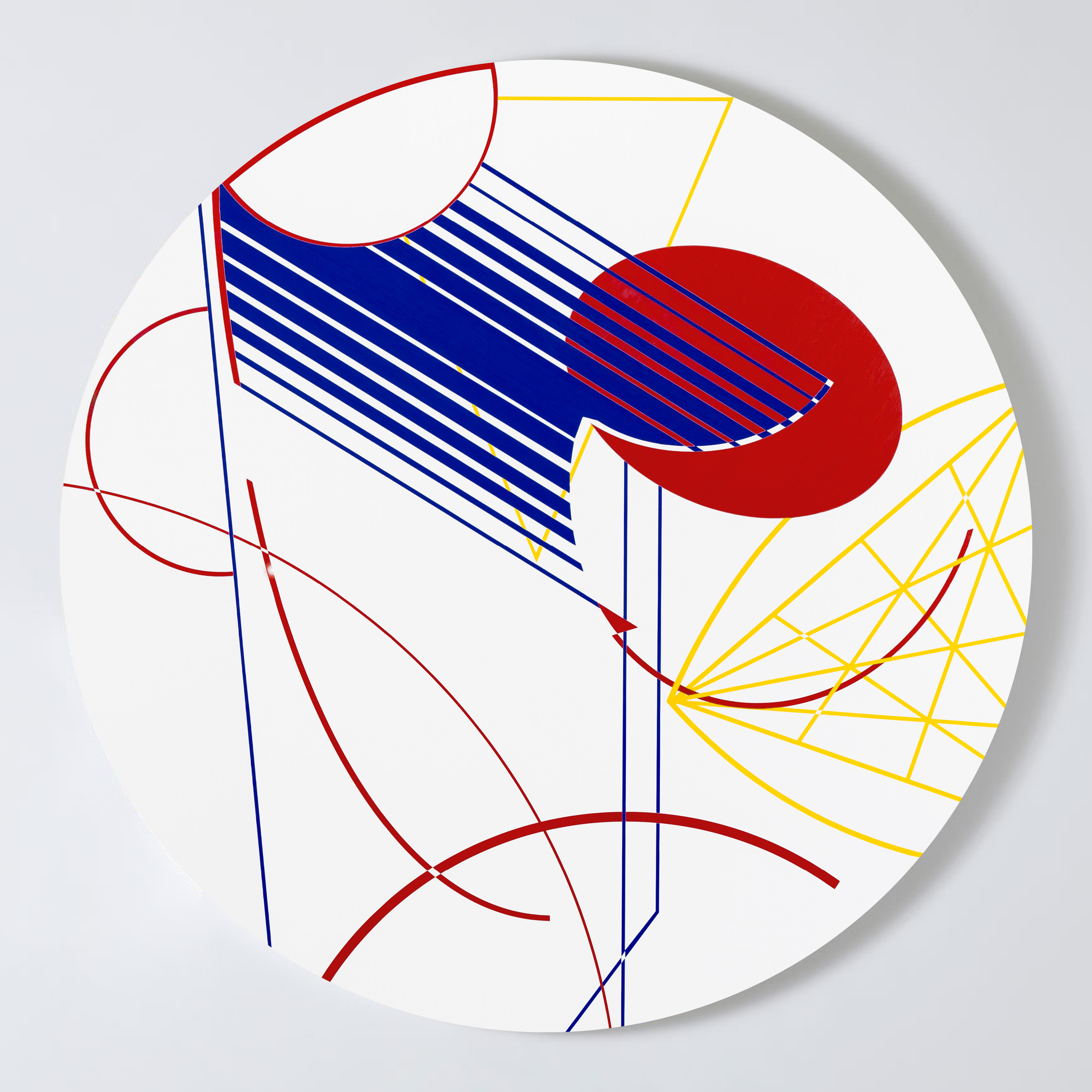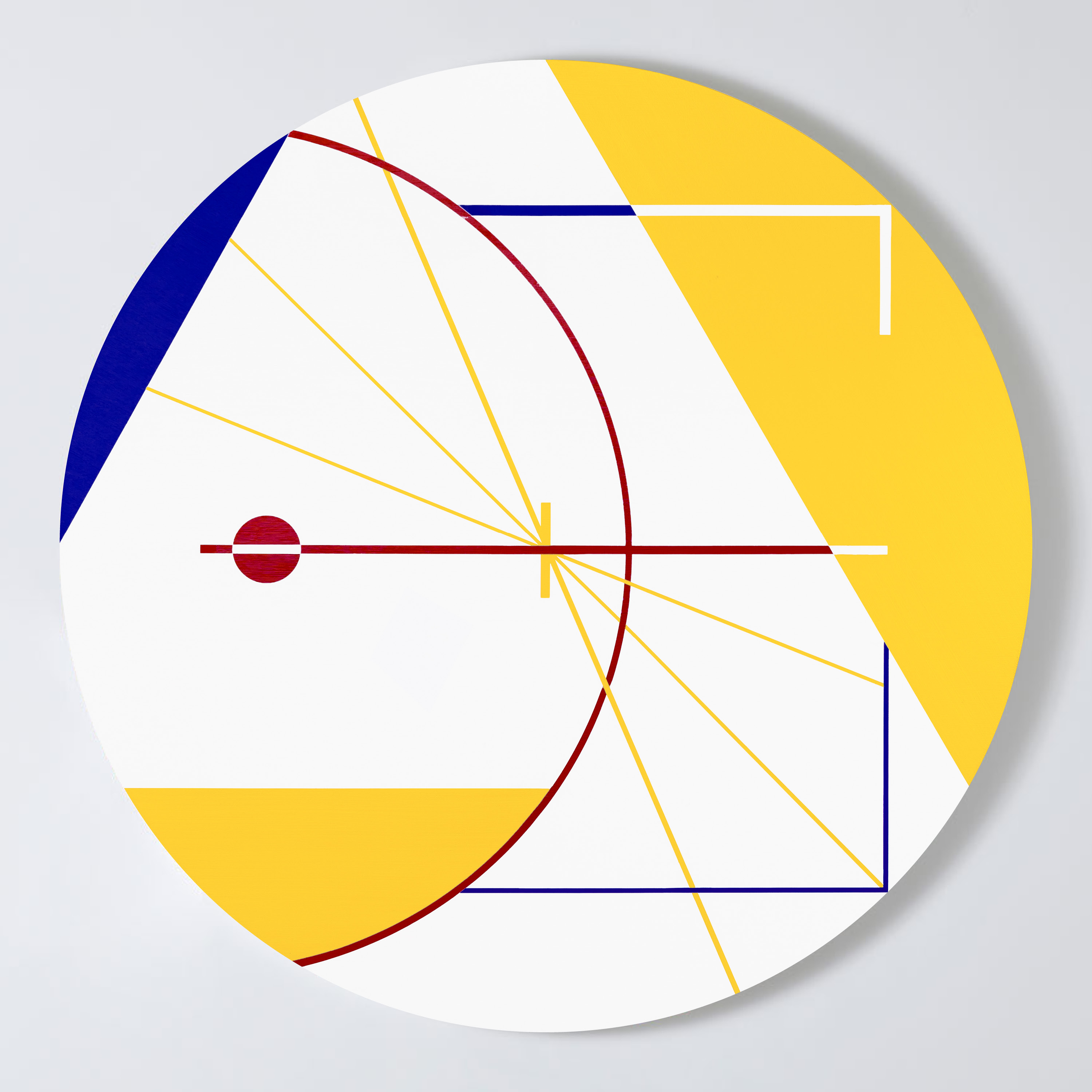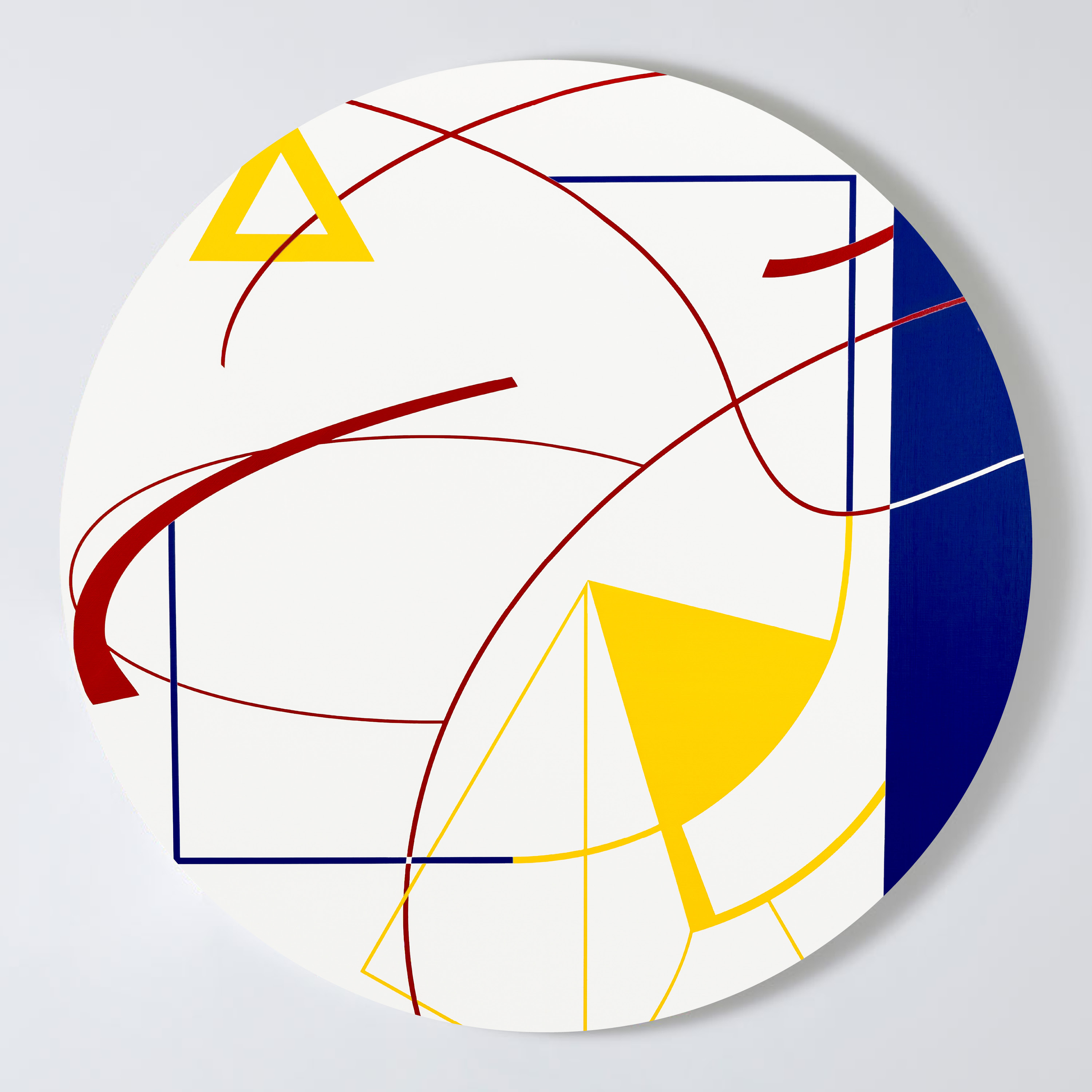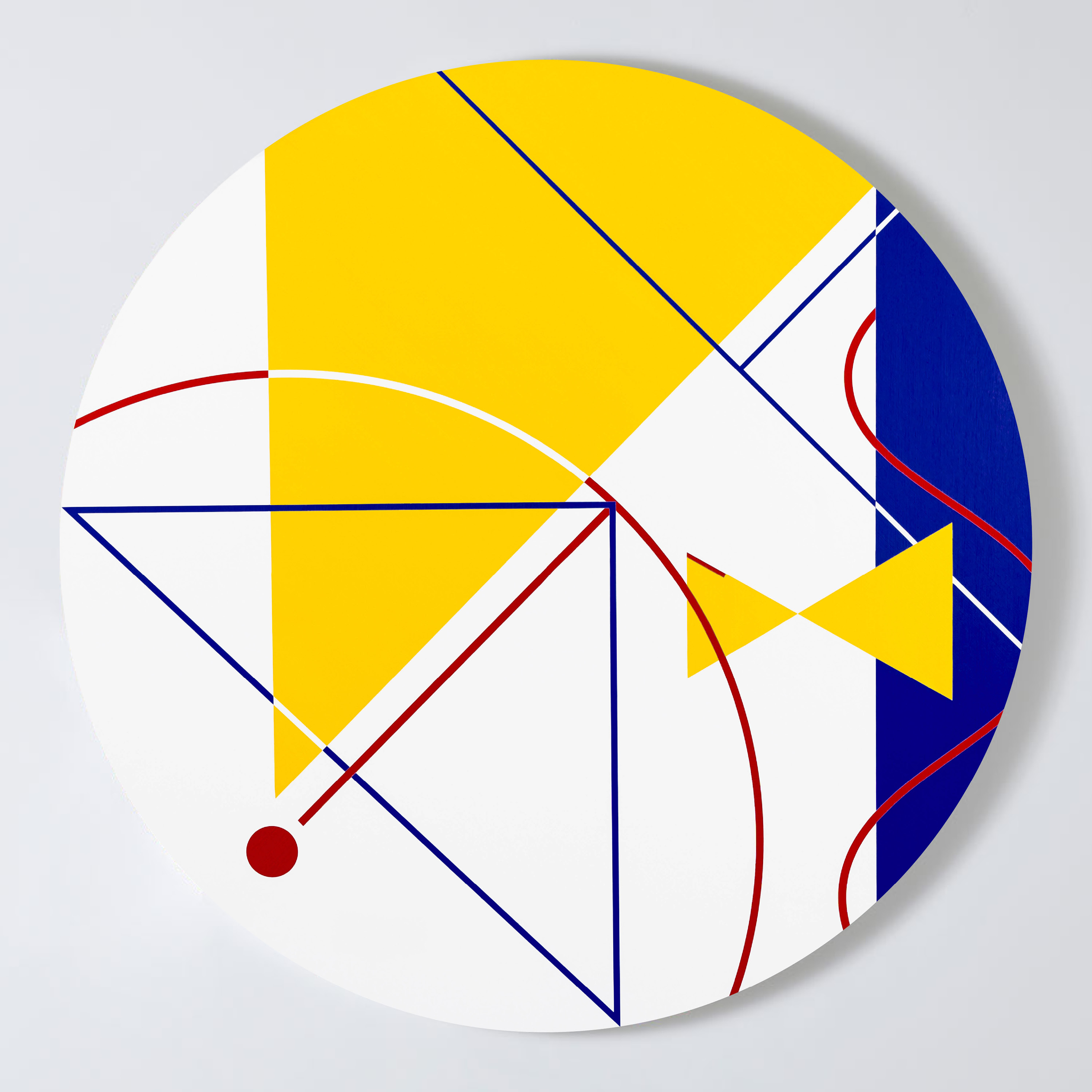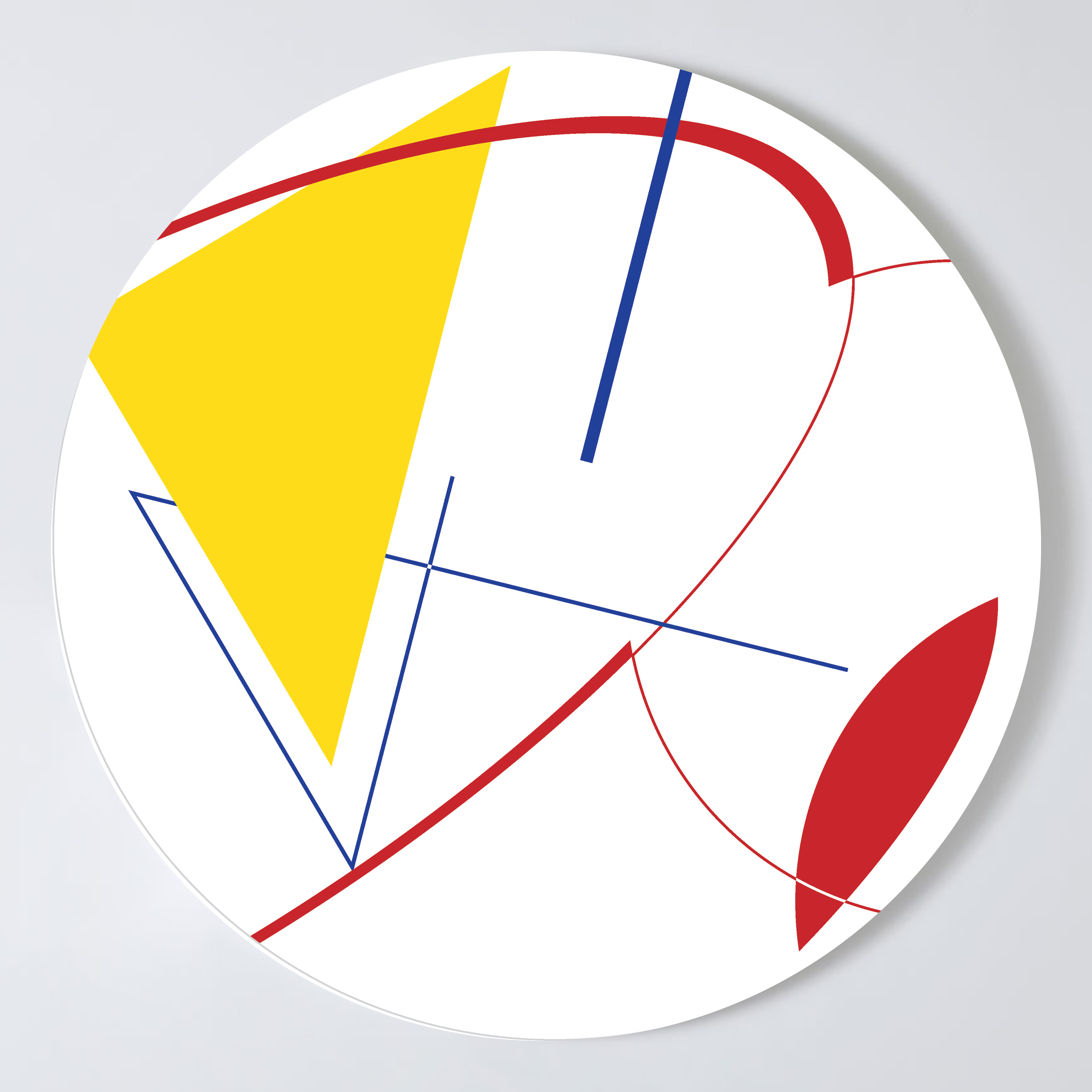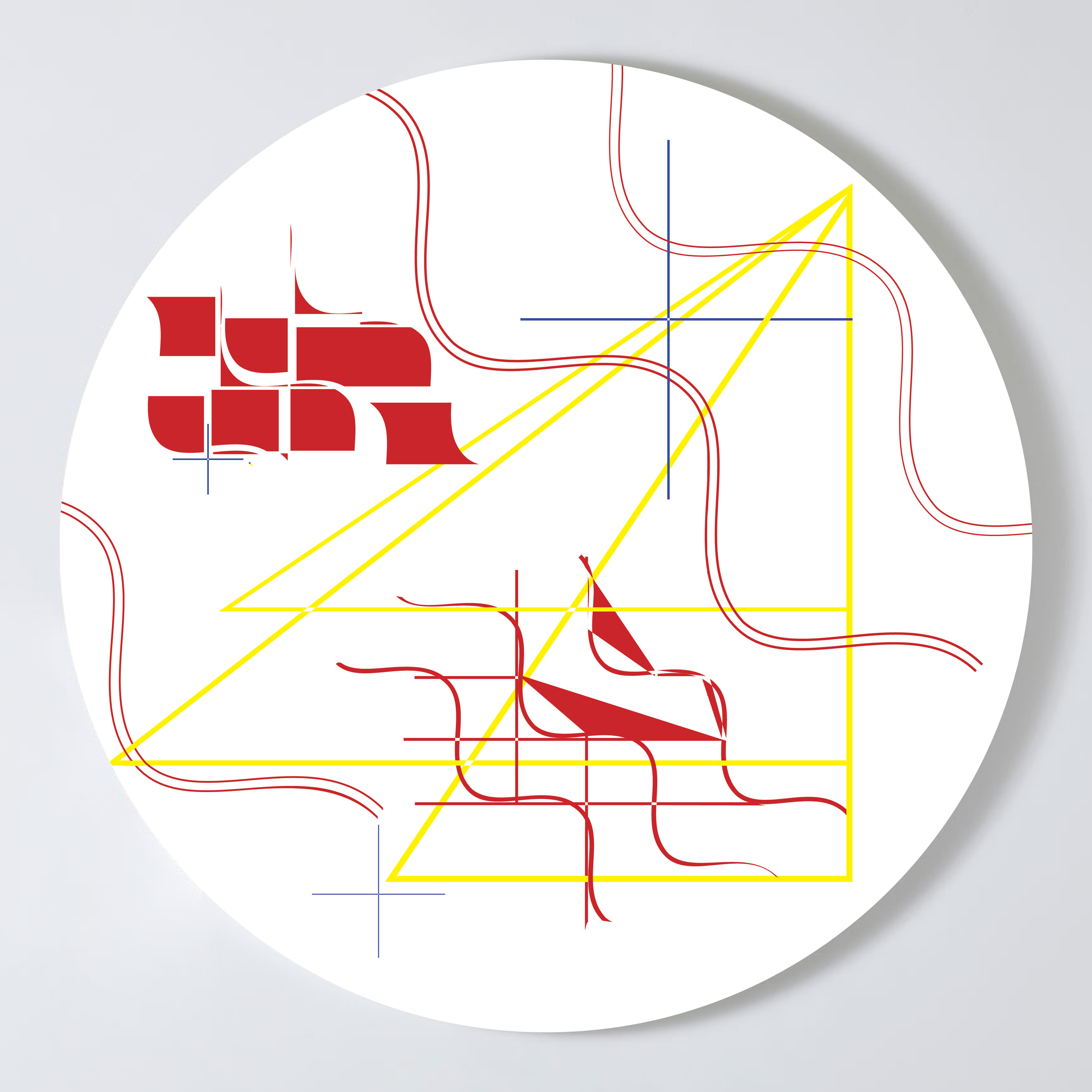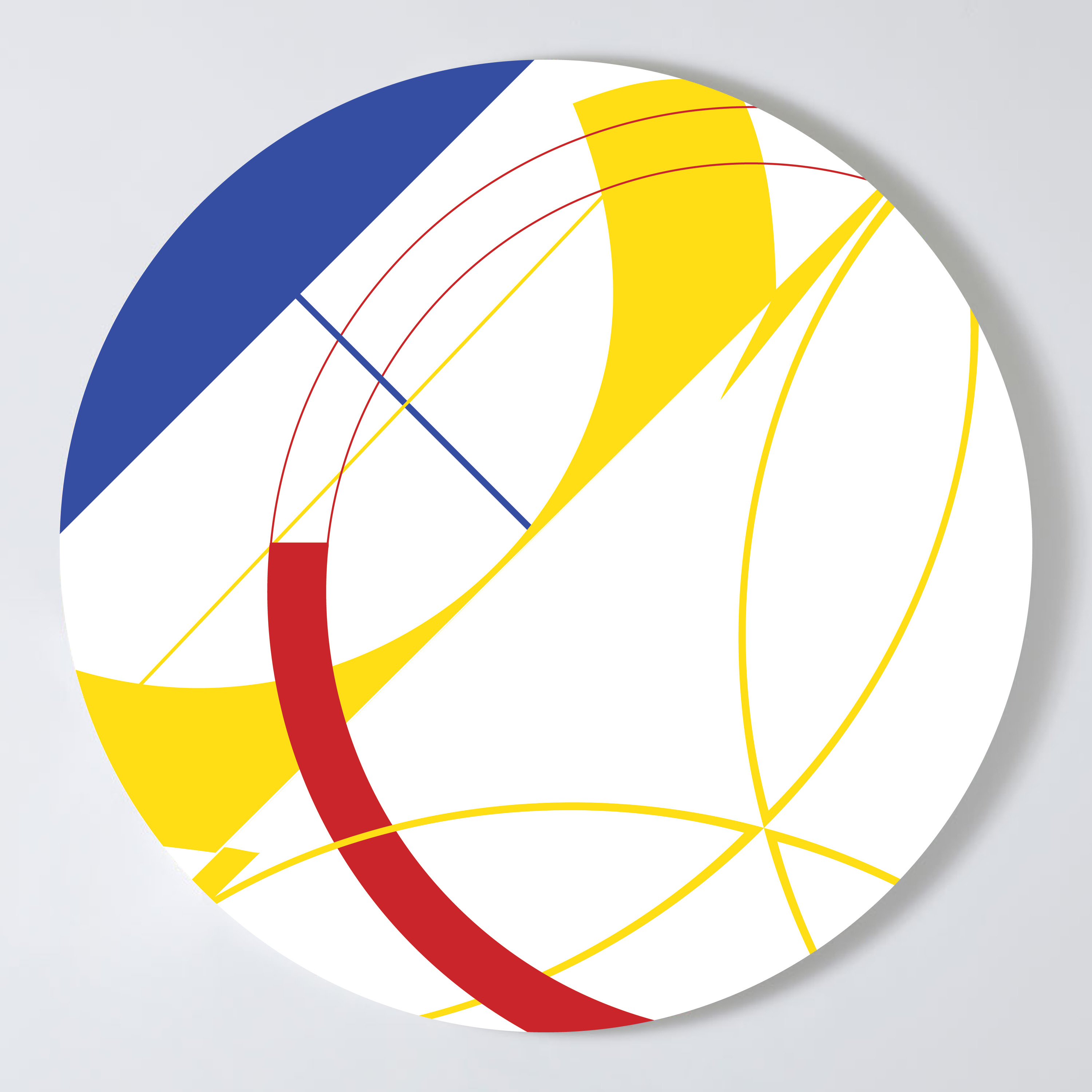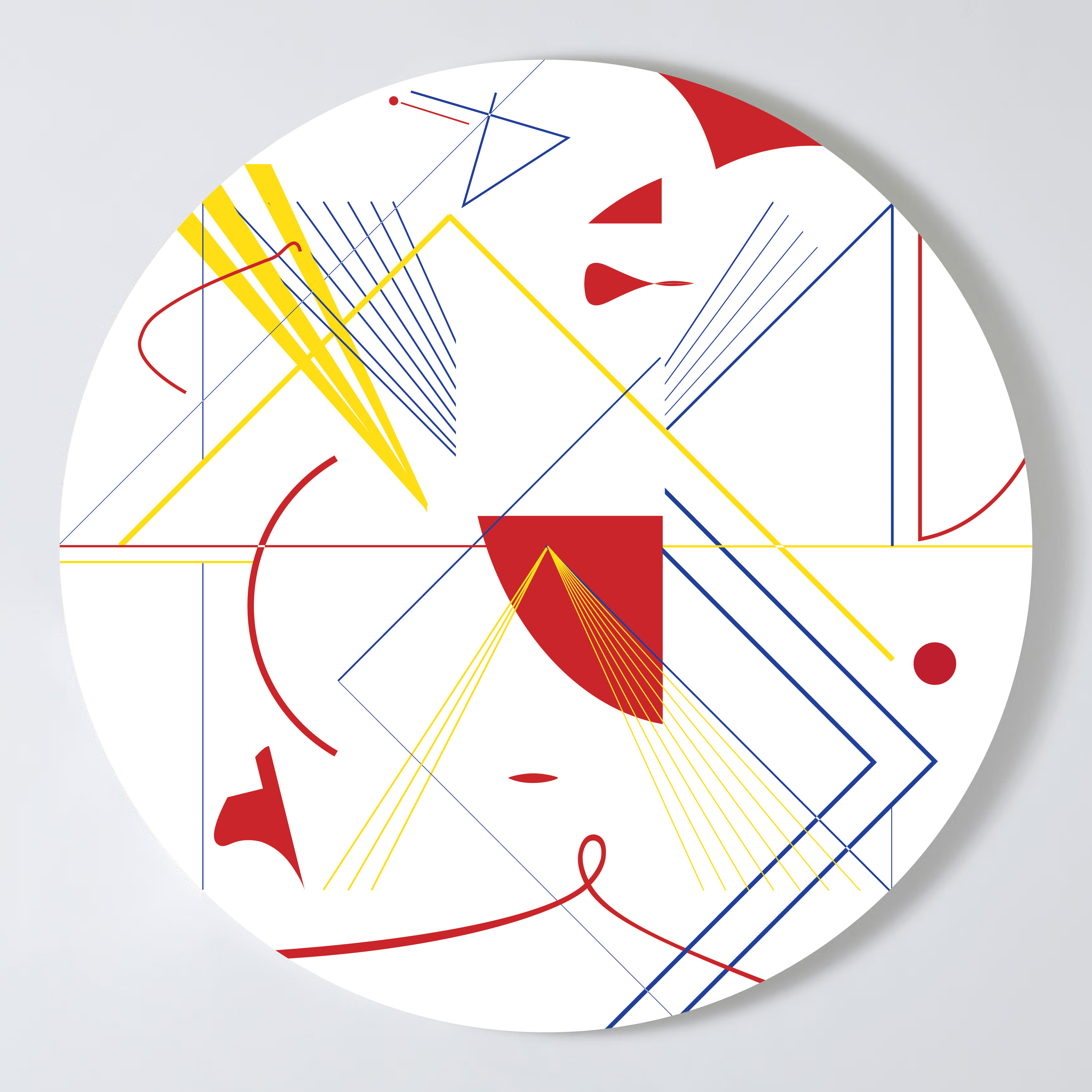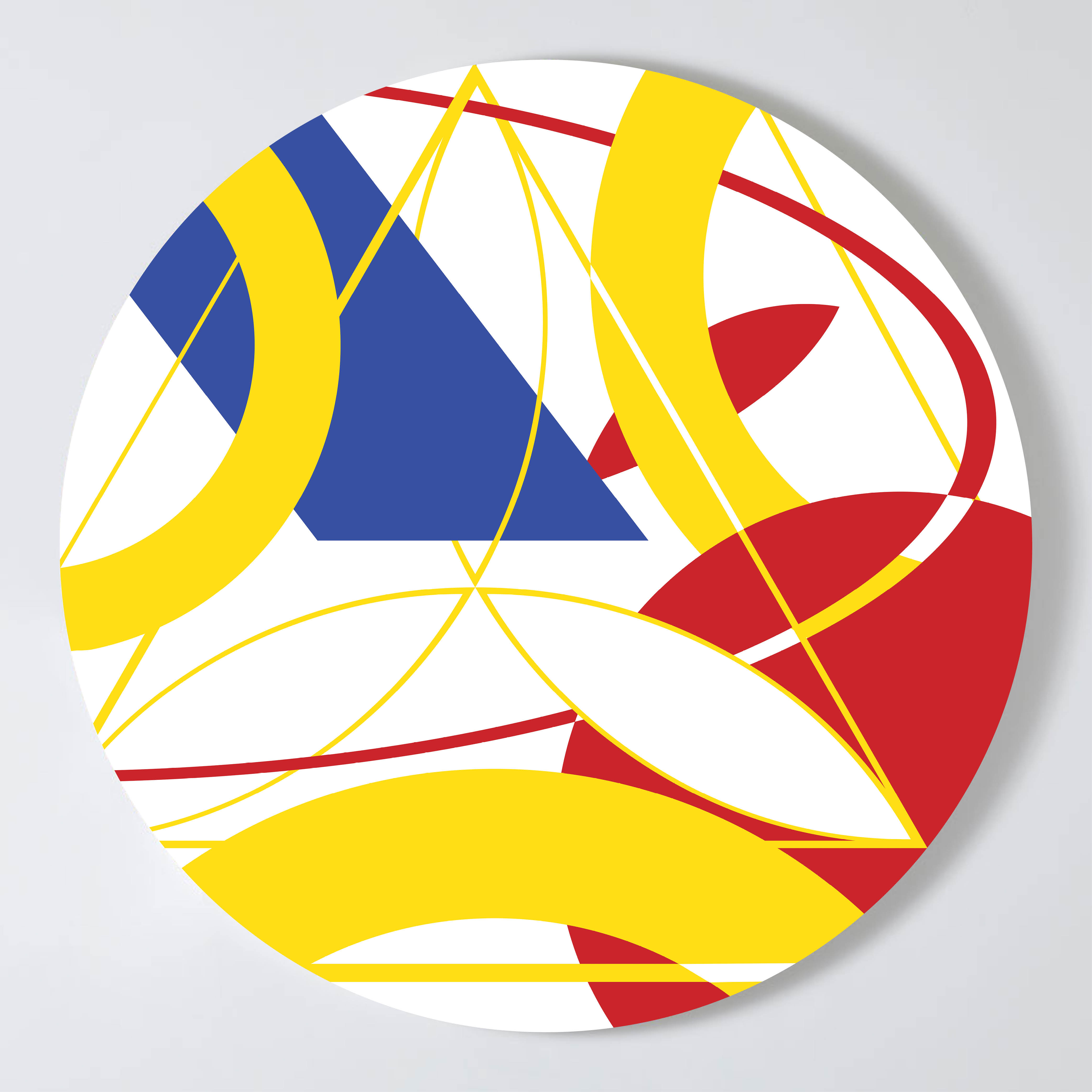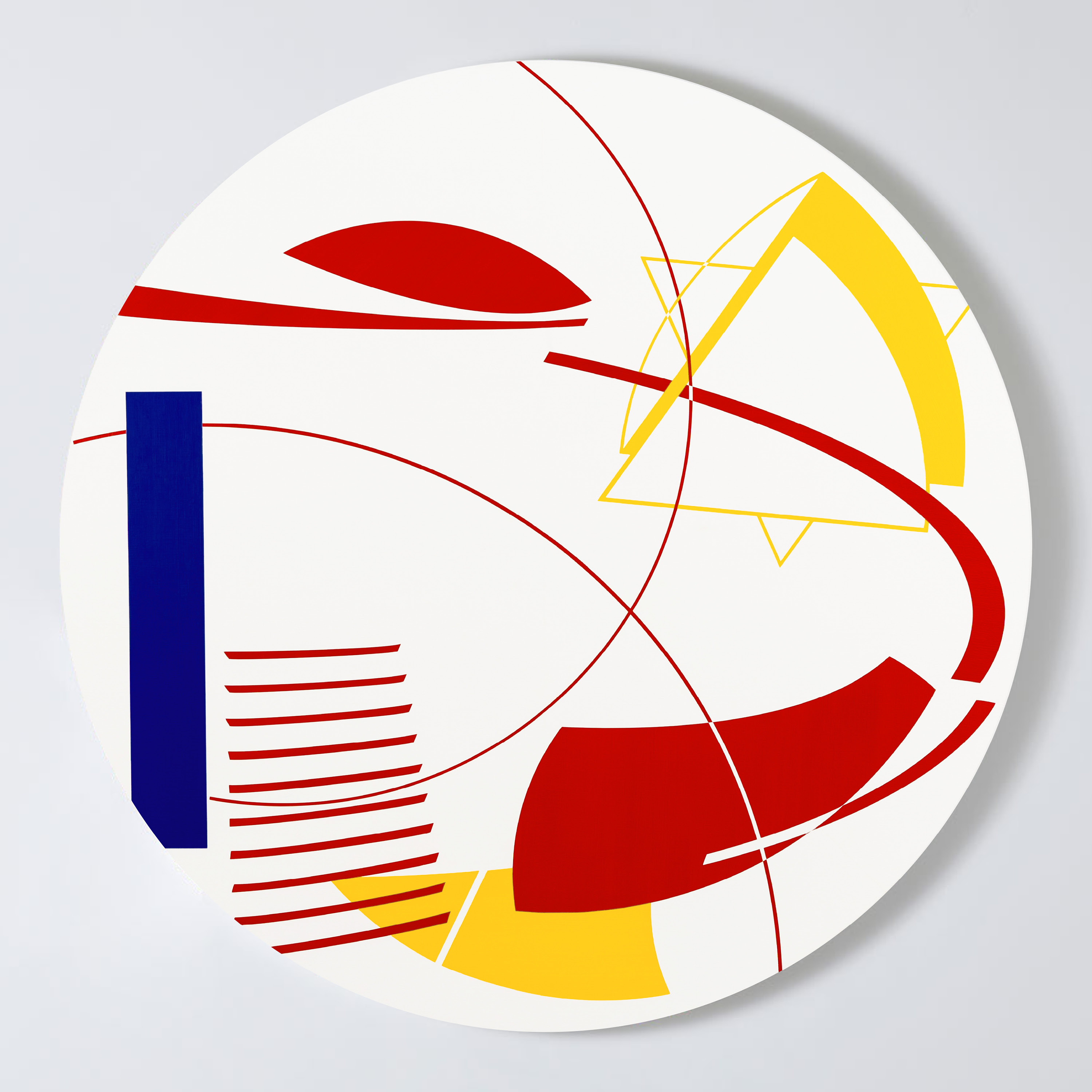
BYR OS 08
2024 Oil on canvas 120cm(47.24inch) diameter
Provenance
Artist Collection, 2026
Exhibitions
2024《Schematic Medium as Meta-Conceptualism》, A gallery, Seoul
About The Work
The BYR OS series is grounded in the archetypal structure of the 99 BYR Prime Elements and the ‘Conceptual Practice’ derived from them. Each unit carries its own code—Blue (square/human), Yellow (triangle/nature), and Red (circle/cosmos)—and the OS works recombine three selected units according to relations, structure, and transformation. This method is not a matter of choosing a compositional arrangement, but a procedural operation that reorganizes perceptual structure. Through this transformative process, OS expands the foundational language of the BYR Prime Elements into a more intricate structural order and functions as an organic medium in which relational forces and structural shifts accumulate. The more detailed visual principles are articulated in 'BYR Organic Schemata — Relational Visual Grammar'.
Process as Methodology
At the core of OS lies not the finished image but the question of how it is generated. The 'BYR Instruction Guide: 27 Actions' separates creation from intuitive emotion and systematizes relational judgment, structural selection, and perceptual calibration into an articulated methodology. This process is not a manual but a form of procedural cognition in which the artist’s inner sensibility and external structure recondition one another. Each OS work is an accumulation of such structural decisions, offering the viewer not a single mode of interpretation but multiple pathways for reading and reconfiguring the work. In this sense, OS operates as a system where the process itself becomes a central aesthetic and philosophical dimension.
The meta-conceptual approach of BYR OS does not derive its structure from external artistic lineages or theoretical frameworks. Instead, it focuses on re-examining and reorganizing the relational, perceptual, and cognitive operations that unfold within the Schematic Medium itself. In OS, a concept is not a declarative proposition that dictates form; rather, it is an epistemic structure generated through the accumulated adjustments, selections, and transitions that occur between elements.
Here, a concept does not function as a superior rule governing structure. Instead, it operates as a meta-level device that reveals how relations emerge and transform within the system. Conversely, structure is not a visual container that translates the concept into form; it is the site where conceptual operations are tested, recalibrated, and reconfigured.
These two layers do not replace one another. They function interdependently, each examining the logic of relational composition from a different vantage point. Through this dynamic, BYR OS treats a concept not as an externally imposed meaning system but as a cognitive operation that arises from relational movement and is reorganized into a schematic visual language. In this sense, OS operates as a meta-schematic system, translating the internal mechanics of perception and relation into structured form.
While grounded in the three fundamental structures of the BYR Prime Elements, OS extends them into a new visual language rather than a symbolic system. Blue, Yellow, and Red correspond to the ontological axes of human, nature, and cosmos, yet within OS these roles are not fixed: they shift according to relation, situation, and structural transformation. Thus, each element is defined not by what it symbolizes but by what kind of relational configuration it produces. Through this, OS becomes a rare form of perceptual construct in contemporary art, turning the surface into a device where perspective, relation, pressure, and choice continuously reorganize.
The 360-degree rotational structure in OS is not a mechanical feature but a device that reveals how the same configuration can reorganize into an entirely different relational structure when seen from another vantage point. Rotation prevents any single position or interpretation from becoming fixed, and instead frames OS as an open system in which structural forces and meanings remain continuously reconfigurable. The expanded principles of rotation are further developed in 'BYR Organic Schemata — Relational Visual Grammar'.